
Emissions Monitoring
Stay ahead of CPCB limits in real time, not at audit time
Indian manufacturers face tightening emissions regulations from the CPCB and State Pollution Control Boards, more frequent third-party audits, and growing ESG disclosure requirements from banks, investors, and export customers.

Real-time
Emissions readings every 15 seconds
5 pollutants
CO2, SOx, NOx, PM2.5/PM10, VOCs
90%
Reduction in CEMS report preparation time
Scope 1 & 2
GHG inventory calculated automatically
Why Emissions Monitoring?
“Intellyx Emissions Monitoring is a hardware-plus-software module that deploys IoT sensors at factory emission points to measure CO2, SOx, NOx, particulate matter (PM2.5/PM10), and VOCs in real time. The software layer compares live readings against CPCB and SPCB regulatory thresholds and triggers automated alerts before limits are breached. It generates Continuous Emission Monitoring System (CEMS) reports ready for submission to the Central Pollution Control Board and integrates with Intellyx Energy Monitoring to calculate Scope 1 and Scope 2 greenhouse gas emissions for ESG disclosures.”
Indian manufacturers face tightening emissions regulations from the CPCB and State Pollution Control Boards, more frequent third-party audits, and growing ESG disclosure requirements from banks, investors, and export customers. Manual stack testing and periodic compliance checks are no longer sufficient: violations are detected in real time by CPCB's OCEMS network, and penalties for non-compliance include closure notices, heavy fines, and loss of consent to operate. Intellyx Emissions Monitoring places calibrated IoT sensors at every major emission point in your plant (stacks, process vents, cooling towers, and fugitive sources) and streams the data to an on-premises edge system. The dashboard shows live readings for each pollutant against your site-specific consent conditions. When any parameter approaches its threshold, operations staff receive an immediate alert via WhatsApp and the Intellyx dashboard, giving them time to adjust process conditions, activate abatement equipment, or throttle production before a violation is recorded. The system automatically compiles CEMS reports in the format required by your State Pollution Control Board, reducing the time your environmental compliance team spends on data collection and report preparation from days to minutes. For companies with ESG commitments, the module calculates Scope 1 and Scope 2 greenhouse gas emissions using measured data (not estimates), supporting BRSR filings for SEBI-listed companies and CBAM declarations for European exports.

What Emissions Monitoring Does
Core capabilities that make the module production-ready from day one.
Multi-Pollutant IoT Sensor Hardware
Industrial-grade electrochemical and optical sensors are installed at stacks, process vents, and fugitive emission points to continuously measure CO2, SOx, NOx, particulate matter (PM2.5 and PM10), and volatile organic compounds (VOCs). Sensors are certified to BIS and CPCB calibration standards and are hardened for high-temperature, high-humidity industrial environments.
Real-Time Regulatory Threshold Monitoring
The platform is pre-configured with CPCB General Standards, National Ambient Air Quality (NAAQ) standards, and sector-specific emission limits for industries such as cement, steel, chemicals, textiles, and power generation. Site-specific consent conditions from the State Pollution Control Board can be entered and used as the primary threshold set for alerts and reports.
Automated CEMS Report Generation
Continuous Emission Monitoring System reports are generated automatically in the format prescribed by your SPCB, ready for digital submission through the OCEMS portal or physical submission to the board. Report generation is automated daily, monthly, and at any frequency required by your consent conditions, eliminating the manual data-compilation effort for your environment, health, and safety (EHS) team.
Scope 1 and Scope 2 GHG Calculations
Emissions sensor data is combined with Intellyx Energy Monitoring data to calculate Scope 1 greenhouse gas emissions (direct combustion and process emissions) and Scope 2 emissions (from purchased electricity) using IPCC emission factors and GHG Protocol methodology. The output is a GHG inventory ready for inclusion in BRSR (Business Responsibility and Sustainability Reporting) filings required by SEBI for listed companies.
Pre-Breach Alert System
When any monitored parameter crosses a configurable warning threshold (set below the regulatory limit), the system sends an immediate alert to the EHS manager, plant manager, and operations supervisor via the Intellyx dashboard and WhatsApp. This gives operations teams time to throttle processes, activate abatement equipment, or take corrective action before a formal violation is recorded by the OCEMS network.
Historical Trend Analysis and Audit Trail
Every sensor reading is stored with a timestamp, sensor ID, and emission point reference, creating an immutable data log that satisfies the record-keeping requirements of CPCB inspection teams and third-party environmental auditors. Trend analysis views show seasonal patterns, process-correlated emission spikes, and long-term compliance performance, supporting continuous improvement planning for environmental performance.
How Emissions Monitoring Gets Deployed
A structured deployment process that minimises disruption and delivers results within the first 90 days.
Emission Point Survey and Sensor Placement
Perimattic engineers conduct a site survey to identify all significant emission points: stacks, process vents, fugitive sources, and cooling towers. Sensor types and placements are selected based on pollutant profiles, flow rates, and access conditions. A deployment plan is produced that maps each sensor to the relevant CPCB or SPCB consent condition, ensuring complete regulatory coverage.
Hardware Installation and Calibration
IoT sensors and edge data-acquisition units are installed at each emission point. Sensors are calibrated on-site against reference standards and certified to CPCB calibration requirements. Installation typically takes 3–7 days depending on the number of emission points and site complexity. The edge computing unit is commissioned on-premises so that all raw data is stored locally and not dependent on cloud connectivity.
Consent Condition Configuration and Baseline
Site-specific consent conditions from the State Pollution Control Board are entered into the platform alongside CPCB general standards. Baseline emission readings are collected over 7–14 days to establish normal operating ranges. Alert thresholds are set at a configurable percentage below the regulatory limit (typically 80–90% of the limit), giving the operations team adequate warning time before a breach.
Dashboard Activation and CEMS Reporting Go-Live
The live emissions dashboard is activated and the automated CEMS reporting schedule is configured. From this point, daily and monthly compliance reports are generated automatically and distributed to the EHS team and plant management. ESG and GHG inventory reports become available once Intellyx Energy Monitoring data is also connected, completing the Scope 1 and Scope 2 emissions picture.
Emissions Monitoring Across Industries
How manufacturers in different sectors put this module to work.

Cement plants monitor PM10, SOx, NOx, and CO emissions from kilns, coolers, and material handling points against CPCB's sector-specific emission limits. Automated CEMS reports satisfy quarterly submission requirements to the State Pollution Control Board, and pre-breach alerts allow kiln operators to adjust fuel mix or activate bag filter systems before a violation is recorded.
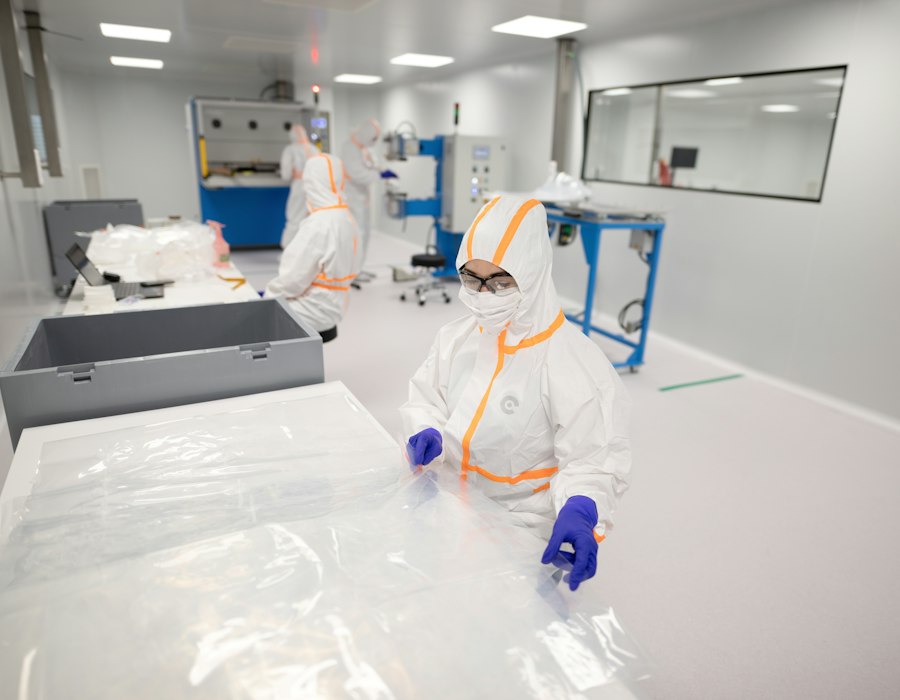

Steel plants and iron foundries track particulate matter, CO, and SO2 from electric arc furnaces, cupolas, and material handling operations. Continuous monitoring supports compliance with CPCB's integrated steel plant standards and provides the GHG emissions data required for Carbon Border Adjustment Mechanism (CBAM) declarations on European exports.
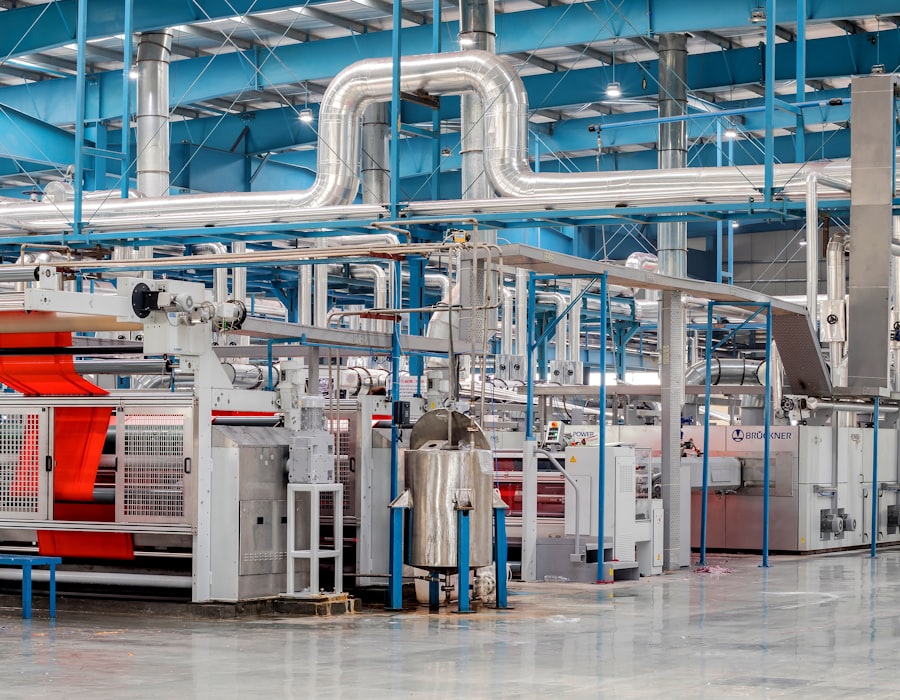
Thermal power stations and captive power plants track SOx, NOx, PM, and mercury emissions from boiler stacks against CPCB's revised 2015 norms for coal-fired plants. Continuous monitoring ensures compliance with tightened SO2 limits (100 mg/Nm3 for units installed after 2017) and generates the data required for annual environmental clearance renewals and CERC reporting.

Common Questions About Emissions Monitoring
What pollutants does Intellyx Emissions Monitoring measure?
Intellyx Emissions Monitoring measures five categories of pollutants: carbon dioxide (CO2), sulphur oxides (SOx), nitrogen oxides (NOx), particulate matter (PM2.5 and PM10), and volatile organic compounds (VOCs). Additional parameters such as carbon monoxide (CO), hydrogen sulphide (H2S), ammonia (NH3), and heavy metal particulates can be included based on your process profile and consent conditions. The specific sensor configuration for each emission point is determined during the site survey, where Perimattic engineers assess your process chemistry and match sensor types to the relevant CPCB or SPCB parameters. All sensors are selected and calibrated to meet the measurement accuracy requirements prescribed in CPCB's CEMS Guidelines.
How does Intellyx help with CPCB and SPCB compliance reporting?
Intellyx automates the preparation of Continuous Emission Monitoring System (CEMS) reports in the format specified by the Central Pollution Control Board and the relevant State Pollution Control Board. Daily, monthly, and half-yearly reports are generated automatically from sensor data and can be submitted directly through the CPCB's OCEMS portal or provided to the EHS team for manual submission. The platform stores the complete sensor data log required for board inspections, with tamper-evident timestamping that satisfies the record-keeping requirements under the Air (Prevention and Control of Pollution) Act, 1981. This typically reduces the time your EHS team spends on emissions data collection and report preparation from several working days per month to under an hour.
What is the difference between Intellyx Emissions Monitoring and a traditional manual stack test?
Traditional stack testing is a periodic, point-in-time measurement conducted by an accredited laboratory typically once or twice a year, or more frequently if mandated by your consent conditions. It captures emissions at one moment and cannot detect spikes that occur between testing cycles. Intellyx Emissions Monitoring is a continuous system that records readings every 15 seconds, 24 hours a day, 365 days a year, capturing the full emissions profile rather than a snapshot. Continuous monitoring also satisfies CPCB's requirement for CEMS at large and highly polluting industries (HPIs), which cannot be met by periodic stack testing alone. For facilities that are not yet mandated for CEMS, continuous monitoring provides a competitive advantage in environmental audit performance and supports proactive compliance rather than reactive corrections after a violation.
Can Intellyx Emissions Monitoring help with our BRSR and ESG disclosures?
Yes. Intellyx integrates emissions sensor data with energy consumption data from the Intellyx Energy Monitoring module to calculate Scope 1 and Scope 2 greenhouse gas emissions according to the GHG Protocol Corporate Standard and using IPCC emission factors. The output is a structured GHG inventory that can be directly referenced in the Business Responsibility and Sustainability Reporting (BRSR) disclosures required by SEBI for listed companies, as well as in voluntary ESG reports following GRI or CDP frameworks. For exporters to Europe, the platform can also generate the emissions data required for Carbon Border Adjustment Mechanism (CBAM) declarations. This eliminates the need for manual GHG calculations by your finance or sustainability team and ensures the figures are based on actual measured data rather than estimated emission factors.
What happens if an emission reading approaches the regulatory limit?
When a monitored parameter crosses a configurable warning threshold (which is typically set at 80–90% of the applicable CPCB or SPCB limit), the system sends an immediate alert to the designated EHS manager, plant manager, and operations supervisor via the Intellyx dashboard and WhatsApp. The alert includes the specific emission point, the pollutant, the current reading, and the applicable regulatory limit, giving operations staff full context to respond quickly. The system also logs the alert event with a timestamp, creating a documented response record that can be presented to the pollution control board to demonstrate that corrective action was taken. If the parameter continues to rise and breaches the regulatory limit, an escalation alert is sent to senior management.
Is the emissions data stored on-premises or in the cloud?
All raw sensor data is stored on-premises on the Intellyx edge computing unit at your facility, consistent with Intellyx's edge-first architecture across all modules. This ensures that your emissions compliance records remain on your premises, that the system continues to operate and record data even during internet outages, and that sensitive process data is not transmitted to external cloud servers. Aggregated reporting data and dashboards can be accessed securely from any browser via the Intellyx platform. For multi-plant groups that want a consolidated emissions view across sites, Intellyx supports secure site-to-site data synchronisation to a designated company server without routing data through third-party cloud infrastructure.
More questions? Talk to the Perimattic team
Related Intellyx Modules
Modules that are often deployed alongside Emissions Monitoring on the same Intellyx manufacturing intelligence platform.

Deploy Emissions Monitoring In Your Factory
Perimattic starts with a scoping call to understand your specific challenges, then provides a practical deployment plan and ROI estimate before you commit.