
ManageStacks is a fully managed platform that deploys and operates 50+ open-source applications — including n8n, ERPNext, Grafana, PostgreSQL, and Dify — on AWS, Azure, or GCP via cloud marketplace subscriptions. We handle provisioning, SSL, monitoring, backups, updates, and security patches so your team can use production-grade open-source tools without hiring DevOps engineers.
Deploy and manage open-source apps without the DevOps headache
ManageStacks runs production instances of 51open-source applications — Keycloak, Grafana, Ollama, PostgreSQL, ERPNext and more — on dedicated infrastructure in AWS, Azure or GCP. Deployment, upgrades, backups and monitoring are handled; the software stays standard and the data stays yours.
 Ollama
 Keycloak
 Grafana
 PostgreSQL
 Redis
Redis n8n
n8n MongoDB
 Gitea
Gitea Prometheus
What is ManageStacks, exactly?
ManageStacks is managed hosting for open-source applications. Pick an application — an LLM runtime, a database, an ERP, an identity server — and it is deployed as a dedicated instance in a chosen cloud region, then kept patched, upgraded, backed up, and monitored. The software is standard and unmodified.
Every plan includes a full data export at any time. Instances can move to self-hosting or another provider without negotiation — the point is to remove operational work, not to create dependence.
Standard, unmodified software
The same Keycloak, Grafana, or PostgreSQL a team would install itself — nothing forked, nothing proprietary bolted on.
Full data export, any time
Every plan includes an on-demand export. Moving to self-hosting or another provider needs no negotiation.
Dedicated instances, your cloud
Provisioned in a chosen AWS, Azure, or GCP region — no shared tenancy, no noisy neighbours.
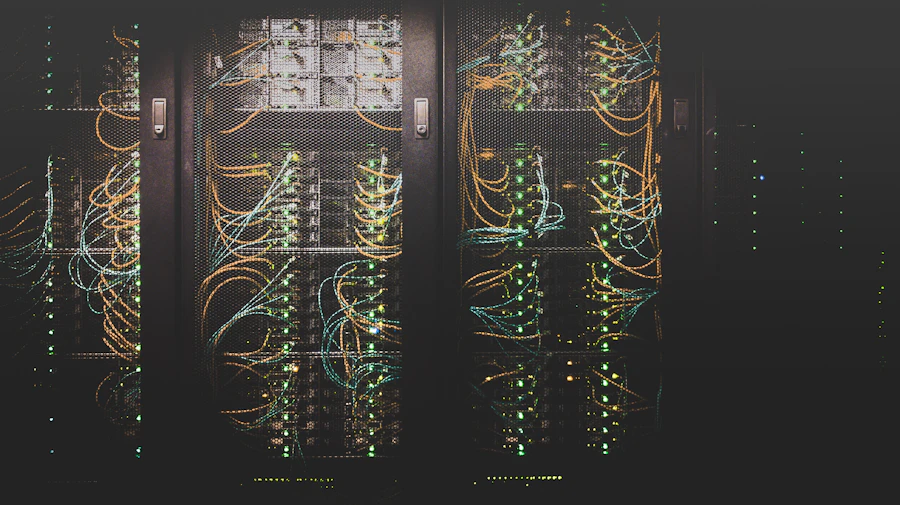
Provisioned, patched, backed up and monitored — your data, your cloud account, no lock-in.


Which applications can run on ManageStacks?
The most-deployed 24 applications, by category. Every one runs from $15 per month with backups and upgrades included; 30 more are available on request.
| Category | Applications | Typical use | From |
|---|---|---|---|
| AI & LLM | Ollama · Dify · FlowiseAI · Open WebUI | Private LLM inference, agent builders, chat UIs | $15/mo |
| Databases & storage | PostgreSQL · MySQL · Redis · ClickHouse · MongoDB · MinIO · NocoDB | Relational, key-value, analytics, object storage | $15/mo |
| Observability | Grafana · Loki · Prometheus | Dashboards, log aggregation, metrics | $15/mo |
| Identity & secrets | Keycloak · Vault | SSO, OIDC/SAML, secrets management | $15/mo |
| Automation & dev tools | n8n · Temporal · Apache Airflow · Gitea | Workflow automation, orchestration, git hosting | $15/mo |
| Business apps | ERPNext · Odoo · Twenty CRM · Outline | ERP, CRM, team knowledge base | $15/mo |
Each application has its own page with pricing, plan details and a build-vs-buy comparison — see Managed Keycloak Hosting for the template.
What does self-hosting actually cost compared with managed?
Open-source software is free; operating it is not. The table below is the typical ongoing load for one production application, priced at a conservative $100 per engineer-hour.
| Task | Self-hosted | ManageStacks |
|---|---|---|
| Deployment & hardening | 8–16 hours per application | Included — live in under 30 minutes |
| Version upgrades | 2–4 hours per release, several releases a year | Included, tested before rollout |
| Security patching | Unplanned, same-week response expected | Included |
| Backups & restore drills | 1–2 hours a month, plus storage | Daily and tested, included |
| Monitoring & on-call | Your team, whenever it breaks | Business hours included; $499/mo for 24×7 SRE |
| Typical monthly cost per app | 6–10 engineer-hours ≈ $600–$1,000 + infrastructure | $15–$49/mo, infrastructure included |
What does every ManageStacks instance include?
The same operational baseline applies to all 51 applications, on every plan.
Dedicated instances
Every application runs on its own instance — no shared tenancy, no noisy neighbours, full admin access.
Managed upgrades
Version upgrades tested against a snapshot first, then scheduled with the account owner. Breaking changes flagged in advance.
Daily backups
Automated daily backups with 30-day retention and periodic restore drills — a backup that has never been restored is a hope, not a plan.
Security patching
CVE advisories tracked across all hosted applications, with patches applied on a same-week cadence.
TLS & custom domains
Automatic certificates on a hosted URL from day one; point any custom domain at the instance whenever ready.
Export any time
A full data export on request, on every plan — moving to self-hosting or another provider needs no negotiation.
What does ManageStacks cost?
Flat per-app pricing across all 51 applications. A realm, a dashboard or a database with heavy usage costs the same as a quiet one.
Starter
Staging and internal tools. Dedicated instance, TLS, daily backups, managed upgrades.
Standard
Production workloads. Adds monitoring, staging environment, region choice and priority support.
Business
High-traffic and compliance workloads. Adds a high-availability replica and same-day support.
24×7 SRE retainer
Round-the-clock on-call across every hosted application, for teams that need a pager answered at 3am.
How long from subscribing to a live instance?
Three steps, no ticket queue. Most teams have a working, reachable instance before their coffee goes cold.
 1
1Pick an application, plan and region.
Checkout takes two minutes; provisioning starts immediately.
 2
2The instance goes live.
Credentials and a hosted URL arrive within 30 minutes; custom domains and TLS are automatic.
 3
3Import existing data.
Migrations from an existing self-hosted instance are assisted on Standard and Business plans.
When is self-hosting the right answer instead?
“Managed hosting is not always the correct call.”
For everyone else, the arithmetic settles it: a $29 plan costs less than a single engineer-hour a month. Read the three cases on the right before deciding.
You already run a platform team
Kubernetes and an on-call rotation exist. New services add at genuinely low marginal cost.
Compliance requires air-gapped infra
On-premises or fully isolated environments rule out any hosted option, full stop.
You need a fast internal release loop
Heavy customisation with rapid build-deploy cycles is better served owning the whole pipeline.
Common questions about ManageStacks
Is the software modified in any way?
No. Every application runs as its upstream project ships it — same versions, same plugins, same admin access. That is what makes migration in either direction straightforward.
Can an existing self-hosted instance be migrated?
Yes. Standard and Business plans include migration assistance: data import, a parallel-run period and a scheduled DNS cutover.
Who owns the data?
The customer, always. A full export is available at any time, and cancellation includes a final export — no negotiation, no retention.
An application is not on the list — can it be added?
Usually. Around 30 further applications are available on request, and new ones are added when they can be operated to the same backup and upgrade standard.
What does the 24×7 SRE retainer add?
Round-the-clock on-call across every hosted application for $499 a month, with defined response times. Plan-level support covers business hours; the retainer covers 3am.
Ship the app, skip the ops
51 open-source applications, live in under 30 minutes, from $15 per app per month. Cancel any time with a full export.