
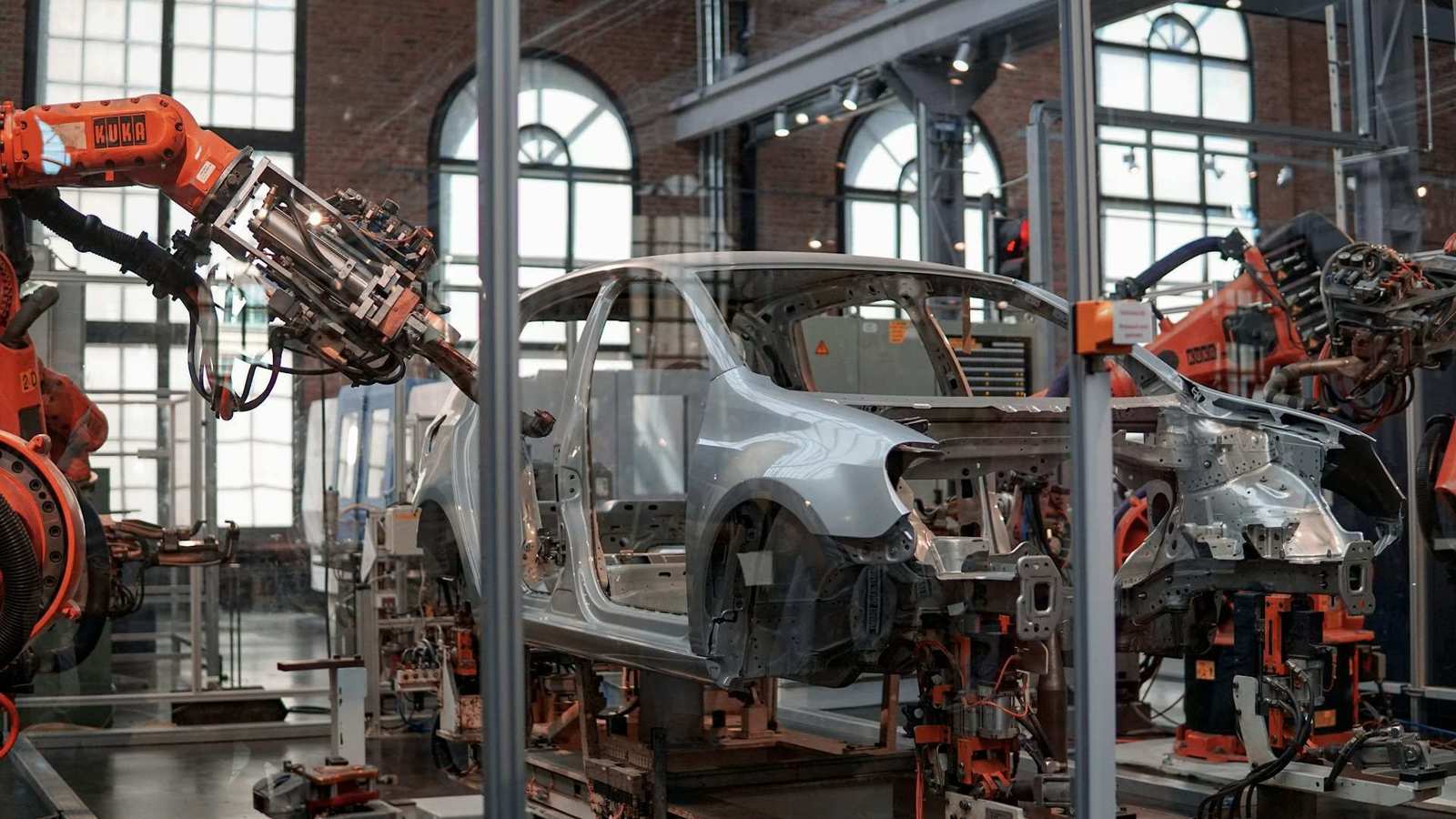
AI Solutions for Manufacturers and Plant Operations
Visual quality inspection, predictive maintenance, production scheduling and plant knowledge assistants, trained on your own lines and connected to your MES, SCADA and ERP. Built to run on the shop floor, not just in a demo.
- Computer vision defect detection at the line
- Condition-based predictive maintenance
- Constraint-aware production scheduling
- Plant knowledge assistants over SOPs and manuals
- Demand and inventory forecasting
Proof of concept in 2–4 weeks. Production release in 6–14 weeks.
What is AI in manufacturing?
AI in manufacturing is the use of computer vision, machine learning and language models to improve quality, uptime and throughput on the plant floor. The two most proven applications are visual quality inspection and predictive maintenance; inspection usually pays back fastest because it needs cameras rather than a full sensor retrofit.
Most plants already generate the data AI needs: images from inspection stations, vibration and temperature from critical assets, and years of work orders in the CMMS. The hard part is getting a model to hold up under real lighting, real product variation and real line speeds, and then wiring its output into the systems operators actually use.
Last reviewed by the Perimattic AI engineering team.
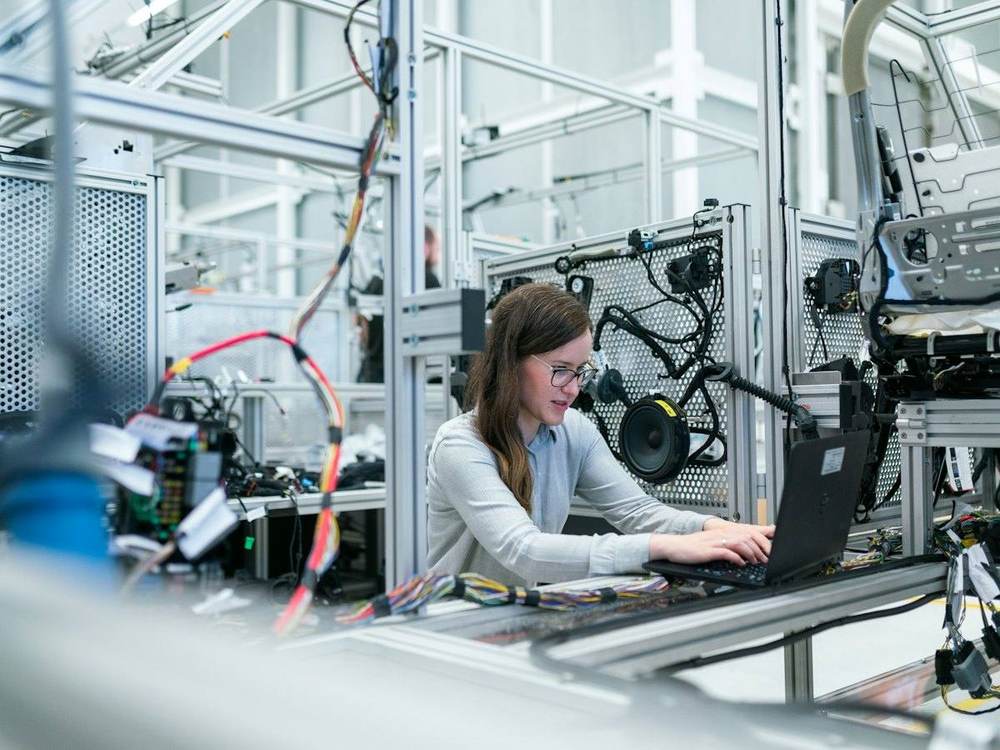
How is AI used in manufacturing?
Six use cases cover most of the return we see in discrete and process manufacturing. Each targets a cost plant managers already track: scrap, downtime, changeover time or expediting.
Visual quality inspection
Computer vision at inspection stations flags surface defects, dimensional deviations and assembly errors at line speed, and logs every image for traceability.
Data it needs: Images of good parts and each defect type, a few hundred per class
Predictive maintenance
Models learn normal behaviour from vibration, temperature and current signals and warn maintenance teams days before a failure, shifting work from calendar-based to condition-based.
Data it needs: Sensor history on critical assets plus CMMS work orders
Production scheduling
Optimisation and ML models sequence jobs around machine capacity, changeovers, labour and due dates, and re-plan quickly when a machine goes down.
Data it needs: Routings, cycle times, changeover matrices and order book
Plant knowledge assistants
Retrieval-based assistants answer operator and technician questions from SOPs, manuals and past work orders, with citations to the source document.
Data it needs: SOPs, equipment manuals and maintenance history
Demand and inventory forecasting
Forecasts at SKU and plant level that feed MRP, cutting both stockouts and excess raw material and finished-goods inventory.
Data it needs: Two or more years of orders, shipments and inventory
Energy and yield optimisation
Models that recommend process set-points to reduce energy per unit and improve yield in furnaces, ovens, extruders and other process equipment.
Data it needs: Historian data with process parameters and outcomes
Which manufacturing AI use case should you start with?
Start with visual inspection or a knowledge assistant: both need little new infrastructure and show results in weeks. Predictive maintenance pays back well but depends on sensor coverage of the assets that matter, so it often starts with an instrumentation audit.
| Use case | Data it needs | Time to first result | Watch out for |
|---|---|---|---|
| Plant knowledge assistant | SOPs, manuals, work orders | 3–6 weeks | Document quality; version control of SOPs |
| Visual quality inspection | Labelled images per defect | 4–8 weeks | Lighting and camera placement; rare defects |
| Demand forecasting | Orders + shipments history | 4–8 weeks | Promotions and one-off orders in the history |
| Production scheduling | Routings + order book | 6–12 weeks | Undocumented constraints planners carry in their heads |
| Predictive maintenance | Sensor data + failure history | 8–14 weeks | Too few recorded failures; sensor gaps |
Built for OT security, quality systems and plant integration
Manufacturing AI has to respect the boundary between IT and OT, fit your quality management system, and keep running when the network does not. These are the standards and systems we design around.
IEC 62443
Network segmentation and secure data flows between OT assets and AI services, with no inbound paths to control systems.
ISO 9001 and IATF 16949
Inspection results and model changes recorded so they fit your quality records and change control.
FDA 21 CFR Part 11
Audit trails and electronic record controls for AI used in regulated medical device or pharma production.
ISA-95
Clear placement of AI services between levels 2 and 4, so MES, SCADA and ERP integration stays maintainable.
EU AI Act and Machinery Regulation
AI used as a safety component is high-risk; we flag this at scoping and document accordingly.
Data ownership
Production data stays in your environment, on edge devices or your cloud tenancy, never pooled with others.
Typical systems in scope
We design and document systems to meet these requirements. Certification and regulatory sign-off stay with your organisation; we supply the evidence your reviewers ask for.
From scoping call to production in five stages
Every engagement follows the same staged process, priced before the work starts and measured against a baseline agreed up front.
- 11–2 weeks
Scoping and data assessment
Use case defined, data readiness scored, compliance constraints listed, and a fixed quote agreed.
- 21 week
Baseline and evaluation design
Today's accuracy, cycle time or loss rate measured, and success thresholds agreed in writing.
- 32–8 weeks
Model development
Data preparation, training and iteration against a held-out test set, with weekly demos on real data.
- 42–4 weeks
Integration
Inference wired into the systems your teams already use, with auth, audit logging and fallback paths.
- 5Ongoing
Production and monitoring
Deployment, drift and accuracy monitoring, alerting, retraining and runbooks for your operations team.
For manufacturers, scoping includes a site walk or video survey of the line, so camera placement, lighting, sensor coverage and network constraints are known before a quote is written.
What makes Perimattic a fit for manufacturing AI
We build AI and software for manufacturers, from vision systems to MES and ERP integrations. Here is work in production, and the principles we apply on every plant project.
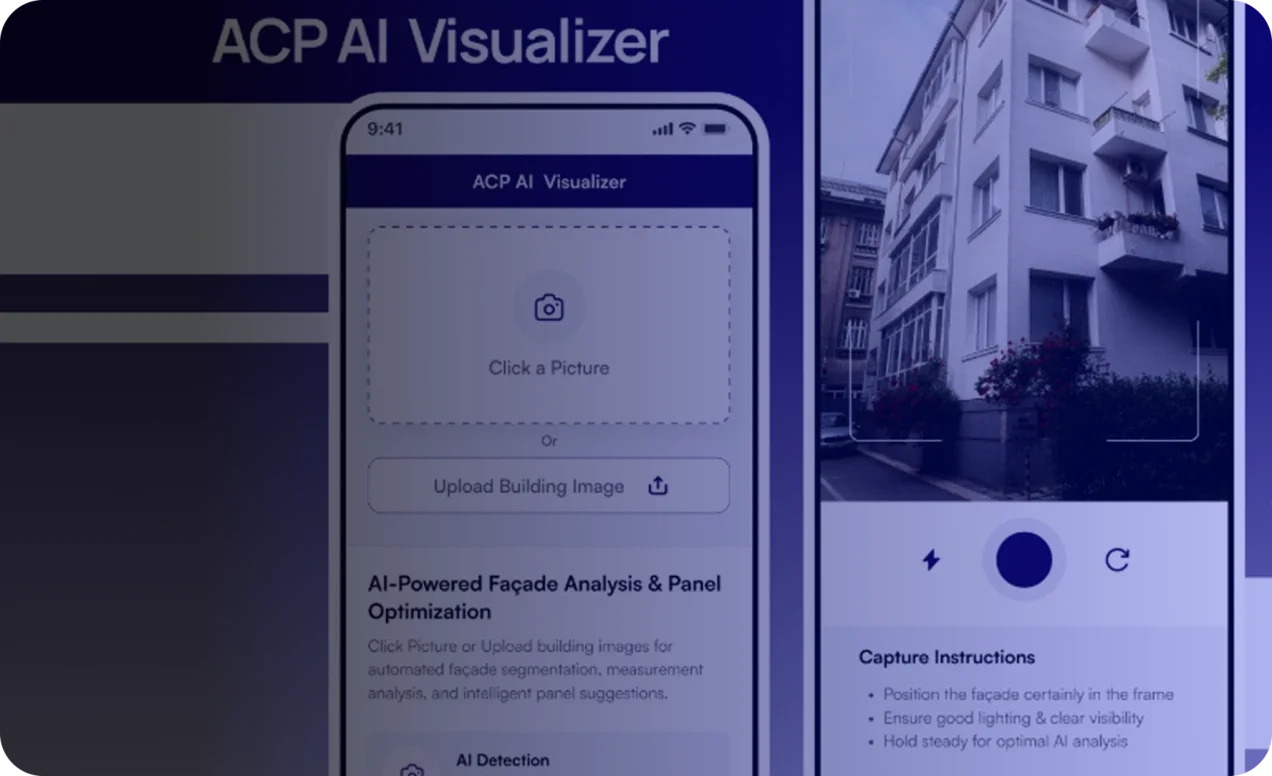

Built for the shop floor
Models are tested under your lighting, product mix and line speed, and can run on edge hardware when latency or connectivity demands it.
OT and IT integration experience
We connect AI to MES, SCADA, historians and ERP using OPC UA, MQTT and vendor APIs, respecting your OT security boundary.
Operators in the loop
Outputs appear on HMIs, andon boards or the MES screens operators already use, with clear actions rather than dashboards nobody opens.
You own the system
Models, code, training data and deployment pipelines are yours, so you can retrain and extend without us.
Services behind these manufacturing systems
AI in manufacturing: frequently asked questions
How is AI used in manufacturing?
Manufacturers use AI for visual quality inspection, predictive maintenance, production scheduling, demand and inventory forecasting, energy and yield optimisation, and knowledge assistants for operators and technicians. Inspection and predictive maintenance are the most established.
How does AI visual inspection work on a production line?
Cameras at an inspection station capture each part, and a computer vision model trained on images of good and defective parts classifies it in milliseconds. Defective parts are flagged or rejected, and every image is stored with the result for traceability and retraining.
What data do you need for predictive maintenance?
You need sensor data on the assets that matter, typically vibration, temperature and motor current, plus maintenance history that records when and how failures happened. If critical assets are not instrumented, the first step is a sensor and connectivity plan rather than a model.
Can AI work with older machines and legacy systems?
Usually, yes. Older machines can be retrofitted with external sensors and cameras, and data can be collected through gateways using OPC UA or MQTT. Models then connect to MES, ERP or historians through their existing interfaces.
Should manufacturing AI run on the edge or in the cloud?
Run it on the edge when you need millisecond decisions at the line, or when connectivity is unreliable. Run it in the cloud for planning, forecasting and fleet-wide analytics. Many systems combine both: inference at the edge, training and monitoring in the cloud.
Which manufacturing AI project pays back fastest?
Visual quality inspection and plant knowledge assistants usually pay back first, because they need little new infrastructure and target costs plants already measure, such as scrap, rework and time spent searching for information.
How long does a manufacturing AI project take and what does it cost?
A proof of concept for one use case typically takes 2–4 weeks and starts from $3,500. A production system with line integration and monitoring takes 6–14 weeks and typically costs $10,000–$30,000, excluding cameras, sensors or edge hardware, which are quoted separately after a site survey.