
Remote PLC Monitoring
See every PLC in every plant, without stepping onto the shop floor
Most Indian factories, from single-plant MSMEs to multi-location manufacturing groups, already have PLCs running their critical processes.

5+
PLC brands supported out of the box
<1 day
Typical edge gateway installation time
Zero
PLC reconfiguration required
365 days
Historical PLC data retention at edge
Why Remote PLC Monitoring?
“Intellyx Remote PLC Monitoring is a hardware-and-software module that connects existing PLCs in Indian factories to a secure edge gateway, enabling plant engineers and operations managers to view real-time machine parameters, I/O states, fault codes, and alarms from any browser without traveling to the shop floor. The system supports Siemens, Allen-Bradley, Mitsubishi, Delta, and ABB PLCs using Modbus, OPC-UA, and Profinet protocols, making it suitable for brownfield factories with mixed PLC brands. All PLC data is transmitted through an encrypted VPN tunnel. The PLCs themselves are never exposed to the public internet. Historical data is logged at the edge gateway to compensate for the limited onboard memory of most industrial PLCs.”
Most Indian factories, from single-plant MSMEs to multi-location manufacturing groups, already have PLCs running their critical processes. Siemens S7-300s installed fifteen years ago sit alongside new Delta DVPs and legacy Allen-Bradley SLC-500s, each programmed by a different integrator, none of them connected to anything beyond the panel door. The only way to know what is happening is to walk to the cabinet, plug in a programming laptop, and hope the engineer who wrote the logic is still reachable. During night shifts and weekends, when a conveyor trips or a temperature alarm fires, the on-call engineer's only option is to drive to the plant, sometimes hours away, because nobody can see the PLC state remotely. For multi-plant groups, this means full-time engineers stationed at every site, or expensive emergency travel that adds up to lakhs per month in fuel, lodging, and lost production time. Intellyx solves this by deploying a hardened edge gateway that connects to every PLC brand on your floor (Siemens, Allen-Bradley, Mitsubishi, Delta, ABB) over Modbus, OPC-UA, or Profinet, and establishes a secure VPN tunnel back to a centralized dashboard. The PLCs are never exposed to the internet; the architecture is aligned with IEC 62443 OT cybersecurity standards, so your IT security team and auditors stay comfortable. Once connected, every parameter your PLC already tracks (cycle counts, temperature setpoints, motor currents, valve states, alarm logs) becomes visible in real time from any browser, with 365 days of historical data retained at the edge even if connectivity drops. When Remote PLC Monitoring feeds into the Predictive Maintenance module, those motor-current trends and vibration baselines become early-warning signals that flag bearing wear or pump cavitation 24 to 72 hours before failure. When it feeds into OEE Monitoring, every micro-stop and speed loss the PLC registers is automatically classified and rolled into shift-level Availability, Performance, and Quality scores, with no manual data entry and no clipboard tallying.
What Remote PLC Monitoring Does
Core capabilities that make the module production-ready from day one.
Multi-Protocol Edge Gateway
The Intellyx edge gateway supports Modbus RTU, Modbus TCP, OPC-UA, and Profinet, the four protocols that cover the majority of PLCs installed in Indian factories including Siemens S7, Allen-Bradley MicroLogix and CompactLogix, Mitsubishi FX and iQ-R series, Delta DVP and AS series, and ABB AC500. A single gateway can communicate with multiple PLCs simultaneously, even across different protocol types on the same factory floor.
Secure Remote Access Without Internet-Exposed PLCs
PLC data is collected by the on-premises edge gateway and transmitted to the Intellyx platform via an outbound encrypted VPN tunnel. The PLCs themselves have no inbound internet connectivity, eliminating the OT security risk associated with directly internet-connected industrial controllers. This architecture satisfies the network isolation requirements of most Indian manufacturing OEM customers and export market cybersecurity audits.
Real-Time PLC Parameter Visualisation
Configurable dashboards display live values for any PLC register or tag: machine running state, cycle counts, speed setpoints, temperature readings, pressure values, drive frequencies, and custom process parameters. Engineers can view I/O states and internal PLC flags in real time from a browser without needing access to the PLC programming software or HMI.
Alarm and Fault Code Management
The system continuously polls PLC fault registers and maps numeric fault codes to human-readable alarm descriptions configured during setup. When a fault is detected, an alert is sent immediately via the Intellyx Workflow Automation module to the responsible maintenance supervisor or shift engineer (with the machine name, fault code, and recommended action), reducing the time from fault occurrence to diagnosis.
Historical Data Logging
Industrial PLCs typically retain only a short window of historical data in their onboard memory. The Intellyx edge gateway continuously logs all configured PLC tags to local and cloud storage, retaining up to 365 days of historical process data. This enables engineers to review machine behaviour before a fault, identify recurring patterns, and support root-cause analysis investigations that would otherwise be impossible.
Centralised Multi-Plant Dashboard
Manufacturers with multiple plants, a common structure for mid-size Indian industrial groups, can monitor all PLCs across all facilities from a single Intellyx dashboard. Plant-level and machine-level views are available, with status indicators and alarm counts per site, enabling a central engineering or operations team to track machine health across the entire group without local presence at each plant.
How Remote PLC Monitoring Gets Deployed
A structured deployment process that minimises disruption and delivers results within the first 90 days.
PLC Audit and Gateway Sizing
Perimattic engineers conduct a PLC audit to document all installed controllers, their communication ports, protocols, and the parameters relevant to monitoring. Based on this audit, the appropriate edge gateway hardware is specified. The number of gateway units, required protocol modules, and network architecture are confirmed before any hardware is shipped.
Edge Gateway Installation
The edge gateway is installed inside the electrical panel or control room without modifying any existing PLC program or wiring. Communication cables are connected to the PLC communication ports, and the gateway is configured to read the specified registers and tags. Installation typically takes less than one working day per panel and does not require a production shutdown.
Tag Mapping and Dashboard Configuration
All PLC tags, registers, and fault codes are mapped to human-readable labels in the Intellyx platform. Custom dashboards are built for each machine and production area, alarm thresholds are configured, and alert routing is set up through Workflow Automation. Historical logging intervals and data retention policies are confirmed with the plant engineering team.
Secure Connectivity and Go-Live
The edge gateway establishes an outbound VPN tunnel to the Intellyx cloud platform. Live PLC data begins flowing into the dashboards, alarm monitoring goes active, and historical logging commences. Plant engineers and managers receive access credentials and a walkthrough of the remote monitoring interface. For multi-plant deployments, all sites are brought up on the same dashboard in a staggered rollout.
Remote PLC Monitoring Across Industries
How manufacturers in different sectors put this module to work.




Indian industrial groups operating three or more plants in different cities use the centralised dashboard to give the group engineering director a live status view of all PLCs across the portfolio, identifying plants with elevated fault rates, comparing machine utilisation, and dispatching the right engineer to the right location based on remote diagnosis rather than travel-first investigation.


Connect PLCs governing kiln rotation, raw mill feed, clinker cooler dampers, and bag-house filtration across remote grinding units and integrated cement plants spread across multiple Indian states. Engineers at the central technical cell can monitor pyro-process parameters, detect refractory hot-spots, and respond to VFD trip alarms on crusher drives without dispatching a team to site, reducing unplanned kiln stoppages and saving lakhs in per-trip travel and downtime costs.
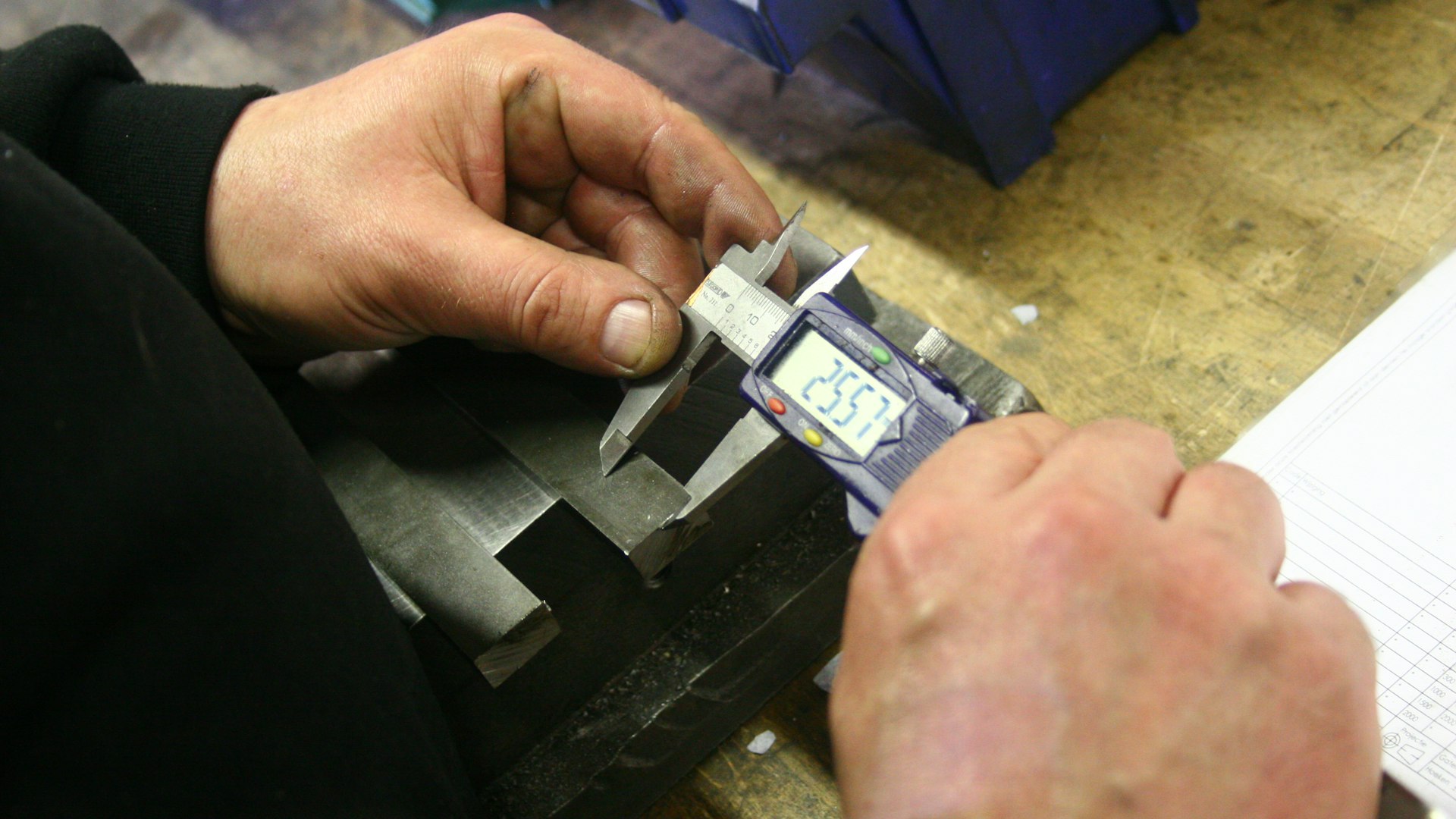
Gain remote visibility into injection moulding machine PLCs, extrusion line barrel-zone temperatures, and blow moulding parison controllers across job-shop floors running mixed Allen-Bradley MicroLogix and Mitsubishi FX units. Real-time cycle-time monitoring and shot-weight trending from a centralized dashboard allows production heads to identify mould-changeover delays and reject spikes across shifts instantly, enabling FMCG packaging suppliers to hold SPC compliance without floor-level firefighting.

Remotely monitor PLC-controlled rolling mill stands, reheating furnace zones, induction furnaces, and continuous casting sequences across mini steel plants and secondary steel units operating round the clock. Secure VPN-tunnelled access to ABB and Siemens controllers lets metallurgical engineers diagnose drive faults, cooling-water valve failures, and furnace trip conditions during night shifts without traveling to hazardous melt-shop floors, reducing mean-time-to-repair and preventing cascade shutdowns that can cost upwards of ₹5 lakhs per hour of lost production.
Common Questions About Remote PLC Monitoring
Which PLC brands and protocols does Intellyx Remote PLC Monitoring support?
Intellyx Remote PLC Monitoring supports Siemens S7-200, S7-300, S7-400, and S7-1200/1500 series via OPC-UA and S7 protocol; Allen-Bradley MicroLogix, SLC 500, and CompactLogix via EtherNet/IP; Mitsubishi FX, Q, and iQ-R series via Mitsubishi MC Protocol and OPC-UA; Delta DVP and AS series via Modbus RTU and Modbus TCP; and ABB AC500 via Modbus TCP and OPC-UA. These brands represent the large majority of PLCs installed across Indian automotive, textile, pharmaceutical, and food processing factories. For less common PLCs or proprietary protocols, the Perimattic engineering team will assess support feasibility during the pre-sale scoping phase. Additional protocol support is added regularly to the edge gateway firmware.
Is it safe to connect our PLCs to an internet-connected system?
The Intellyx architecture is specifically designed to avoid exposing PLCs to the internet. The edge gateway is installed on your local factory network and communicates with PLCs using their native protocols. It reads data only and does not write commands to the PLC under normal operation. Data is transmitted from the gateway to the Intellyx platform via an outbound-only encrypted VPN tunnel, meaning there is no inbound connection that could be exploited to reach the PLC. This architecture follows the Purdue Model for industrial network segmentation and aligns with IEC 62443 principles for OT cybersecurity. Your PLC programs, logic, and control functions remain completely isolated from the internet at all times.
Do we need to modify our existing PLC programs to connect to Intellyx?
No PLC programming changes are required. The edge gateway connects to the communication port of your existing PLC and reads data using the protocol the PLC already supports: Modbus, OPC-UA, or Profinet. The PLC continues to run its existing control logic exactly as before. The only physical change is connecting a communication cable from the PLC to the edge gateway, which requires no panel rewiring or downtime. This is an important consideration for factories where the PLC program is managed by a third-party machine builder or integrator and any modification requires formal validation.
Our factory has PLCs from three different brands. Can Intellyx monitor all of them?
Yes. This is one of the primary design goals of the Intellyx edge gateway. Brownfield Indian factories commonly have a mix of PLC brands accumulated over decades of equipment purchases: Siemens on one line, Delta on another, and Mitsubishi on older machines. A single Intellyx edge gateway can simultaneously communicate with multiple PLCs using different protocols, and all data from all brands is normalised and displayed on a single unified dashboard. This eliminates the need to maintain separate monitoring tools or HMI interfaces for each brand. The unified view is especially valuable for maintenance supervisors who oversee the entire factory floor rather than a single machine type.
Can Intellyx Remote PLC Monitoring alert us when a machine fault occurs?
Yes. The system continuously polls PLC fault registers at configurable intervals and generates an alert the moment a fault code is detected. Alert delivery is handled through the Intellyx Workflow Automation module, which routes fault alerts via WhatsApp to the configured maintenance supervisor or shift engineer within two minutes of fault detection. Each alert includes the machine name, the fault code, and a human-readable description configured during the setup phase. For multi-plant deployments, alerts can be routed to a central engineering team in addition to the local plant maintenance team. Unacknowledged critical alerts escalate automatically to the plant manager.
How does Remote PLC Monitoring integrate with Predictive Maintenance and OEE modules?
Remote PLC Monitoring provides the machine-state and process data foundation that enriches other Intellyx modules. For OEE Monitoring, PLC run/stop signals, cycle counts, and fault codes are the primary data source for calculating Availability and Performance without requiring separate sensor installation. For Predictive Maintenance, PLC data on motor current draw, drive frequency, and temperature setpoints supplements the IoT sensor data to build a more complete picture of machine health. The integration is configured at the platform level: a single piece of PLC data can simultaneously feed OEE calculations, predictive models, and alarm logic, eliminating the need to collect the same data multiple times through separate systems.
More questions? Talk to the Perimattic team
Related Intellyx Modules
Modules that are often deployed alongside Remote PLC Monitoring on the same Intellyx manufacturing intelligence platform.

See how an Intellyx deployment works or compare Intellyx vs SCADA Systems.
Deploy Remote PLC Monitoring In Your Factory
Perimattic starts with a scoping call to understand your specific challenges, then provides a practical deployment plan and ROI estimate before you commit.