


Key Takeaways
- Preventive maintenance follows fixed schedules based on time or equipment usage rather than actual equipment condition.
- Predictive maintenance uses equipment data, sensors, historical records, and analytics to identify potential problems before failure.
- Preventive maintenance is generally easier to implement, while predictive maintenance requires sensors, operational data, and analytics capabilities.
- Predictive maintenance is particularly relevant for critical, high-value equipment where unexpected downtime can be expensive or disruptive.
- Preventive maintenance can still be appropriate for low-cost equipment, predictable failure patterns, regulated inspections, and assets with limited data.
- Many organizations use a hybrid maintenance strategy, applying predictive maintenance to critical assets while retaining preventive maintenance for other equipment.

Industrial organizations have more options than ever for maintaining critical equipment. Preventive maintenance relies on scheduled servicing, while predictive maintenance uses equipment data, analytics, and increasingly AI to identify potential problems before failure occurs.
The right approach depends on the equipment, failure patterns, downtime costs, available data, and operational requirements. In many organizations, the most practical strategy is not choosing one approach exclusively, but applying the right maintenance strategy to each asset.
Executive Summary
Maintenance strategy exists on a spectrum. Reactive maintenance repairs equipment after failure. Preventive maintenance services equipment according to a calendar or usage schedule. Condition-based maintenance responds when a predefined equipment threshold is reached. Predictive maintenance goes further by analyzing historical and real-time data to estimate when failure is likely.
The question is therefore not whether predictive maintenance is universally better than preventive maintenance. The appropriate strategy depends on equipment criticality, failure patterns, downtime costs, available data, and operational maturity.
For a low-cost asset with a predictable failure pattern, a fixed maintenance schedule may be practical. For a critical compressor, pump, turbine, or other high-value asset where failure can create significant downtime, continuous monitoring and predictive analytics may provide greater value.
The most effective maintenance programs often combine these approaches on an asset-by-asset basis.
1. What Is Preventive Maintenance?

Preventive maintenance is a maintenance strategy in which equipment is serviced according to a predetermined schedule based on elapsed time or accumulated usage rather than its measured condition.
A maintenance team may define an interval such as every 90 days, every 2,000 operating hours, or once per quarter. The maintenance activity then takes place according to that schedule regardless of how the equipment is performing at that moment.
Schedules are commonly based on manufacturer recommendations, regulatory requirements, or historical failure patterns.
Common Preventive Maintenance Examples
- Replacing bearings every six months
- Changing filters every three months
- Inspecting pumps after a fixed number of operating hours
- Scheduled lubrication of moving parts
- Routine equipment inspections
- Motor servicing at manufacturer-recommended intervals
+Advantages of Preventive Maintenance
- Simple to understand and communicate
- Easy to implement without advanced data infrastructure
- Easy to plan and budget in advance
- Reduces unexpected and uncontrolled failures
- Works well for equipment with predictable, wear-based failure patterns
–Limitations of Preventive Maintenance
- Healthy equipment may receive unnecessary maintenance
- Components can be replaced before the end of their useful life
- Equipment may be taken offline unnecessarily
- The schedule does not account for the equipment's current condition
- Maintenance costs can compound across large asset fleets
2. What Is Predictive Maintenance?

Predictive maintenance uses equipment data, sensors, historical failure patterns, and analytics to estimate when equipment is likely to require maintenance.
Instead of relying only on a calendar, predictive maintenance continuously evaluates equipment behavior and looks for patterns associated with degradation or potential failure.
Data Used in Predictive Maintenance
How Predictive Maintenance Works
- Collect equipment data: Sensors and existing industrial systems capture operating information.
- Establish normal behavior: A baseline is created for what healthy operation looks like for the asset.
- Detect anomalies: The system identifies readings or trends that differ from the established baseline.
- Identify degradation patterns: Multiple signals are evaluated over time to distinguish meaningful degradation from normal variation.
- Predict potential failure: Analytics estimate a potential failure window based on the observed pattern.
- Generate maintenance recommendations: The prediction is converted into an actionable maintenance recommendation.
- Schedule intervention: Maintenance can be performed during planned downtime before an unplanned failure occurs.
3. Predictive Maintenance vs. Preventive Maintenance
The primary difference is what triggers maintenance. Preventive maintenance uses time or equipment usage, while predictive maintenance uses the actual condition and predicted behavior of the equipment.
| Factor | Preventive Maintenance | Predictive Maintenance |
|---|---|---|
| Maintenance Trigger | Time or usage schedule | Equipment condition and predicted failure |
| Data Required | Minimal data, manufacturer intervals and basic logs | Sensor data, historical records and continuous monitoring |
| Technology | Calendars and CMMS work orders | Sensors, IoT platforms and analytics or ML models |
| Implementation Complexity | Low | Moderate to high |
| Upfront Cost | Lower | Higher due to sensors, integration and modeling |
| Maintenance Frequency | Fixed regardless of condition | Condition-driven |
| Equipment Monitoring | Periodic inspection | Continuous monitoring |
| Downtime | Planned but sometimes unnecessary | Planned and targeted to actual need |
| Failure Risk | Schedule may miss early degradation | Degradation can be detected earlier |
| Best Equipment Type | Low-cost, predictable-failure assets | Critical, high-value, data-rich equipment |
| Typical Examples | Filters, lubrication and routine inspections | Compressors, turbines, pumps and drilling equipment |
4. Scheduled Maintenance vs. Actual Machine Condition
An industrial compressor provides a simple example of the difference.
The Preventive Approach
A company may replace a compressor bearing every 12 months regardless of how the bearing is performing. If the bearing is still operating normally at month 12, the replacement is precautionary rather than based on evidence of degradation.
The Predictive Approach
A predictive system can continuously monitor vibration, temperature, and operating load. If vibration begins increasing over time, the system can identify the developing trend and allow maintenance to be scheduled before failure.
In this scenario, maintenance might be required at month 7 or month 19 rather than automatically at month 12.
Preventive maintenance asks: When should we service this equipment?
Predictive maintenance asks: What is the equipment telling us right now?
Neither question is inherently wrong. The appropriate approach depends on what is being maintained and the operational and economic consequences of failure.
5. Predictive Maintenance vs. Preventive Maintenance Cost
Maintenance cost should not be evaluated only by looking at parts, labor, and scheduled service contracts.
A broader view can include:
- Maintenance cost
- Downtime cost
- Production loss
- Emergency repairs
- Spare parts
- Labor
- Safety considerations
- Asset life impact
Preventive maintenance generally requires less technology investment because it can operate without sensors, advanced analytics, or a dedicated monitoring platform.
Predictive maintenance requires a higher technology investment because organizations may need sensors, data infrastructure, integration, and analytics capabilities.
However, the economics are asset-specific. A critical asset with expensive downtime may justify the additional investment, while a low-cost and easily replaceable asset may not.
Rather than applying a universal ROI figure, organizations should evaluate downtime, production, labor, maintenance, and asset-specific costs for their own equipment.
6. When Does Preventive Maintenance Make Sense?
Preventive maintenance can be appropriate when:
- Equipment is inexpensive to replace
- Failure patterns are predictable
- The equipment has limited monitoring capability
- Downtime costs are relatively low
- Maintenance tasks are simple and standardized
- Regulatory inspections are required
- The asset fleet is relatively small
- Historical performance data is limited
Typical Examples
- HVAC filters
- Fleet vehicle servicing
- Routine lubrication
- Basic low-cost pumps
- Standard regulatory inspections
7. When Does Predictive Maintenance Make Sense?
Predictive maintenance becomes more relevant when several of the following conditions exist:
- Equipment downtime is expensive
- Equipment failure can stop production
- The asset is critical to safety or operations
- Operational data is already available
- Current maintenance costs are high
- Failure patterns are complex
- The equipment fleet is large enough to justify shared analytics infrastructure
- Remote monitoring is required because of site location or access limitations
Industries and Equipment
| Industry | Equipment |
|---|---|
| Oil & Gas | Pumps, compressors, turbines, drilling equipment, pipelines, rotating equipment |
| Manufacturing | Motors, CNC machines, conveyor systems, industrial robots |
| Energy | Wind turbines, generators, transformers |
8. Predictive Maintenance in Oil & Gas
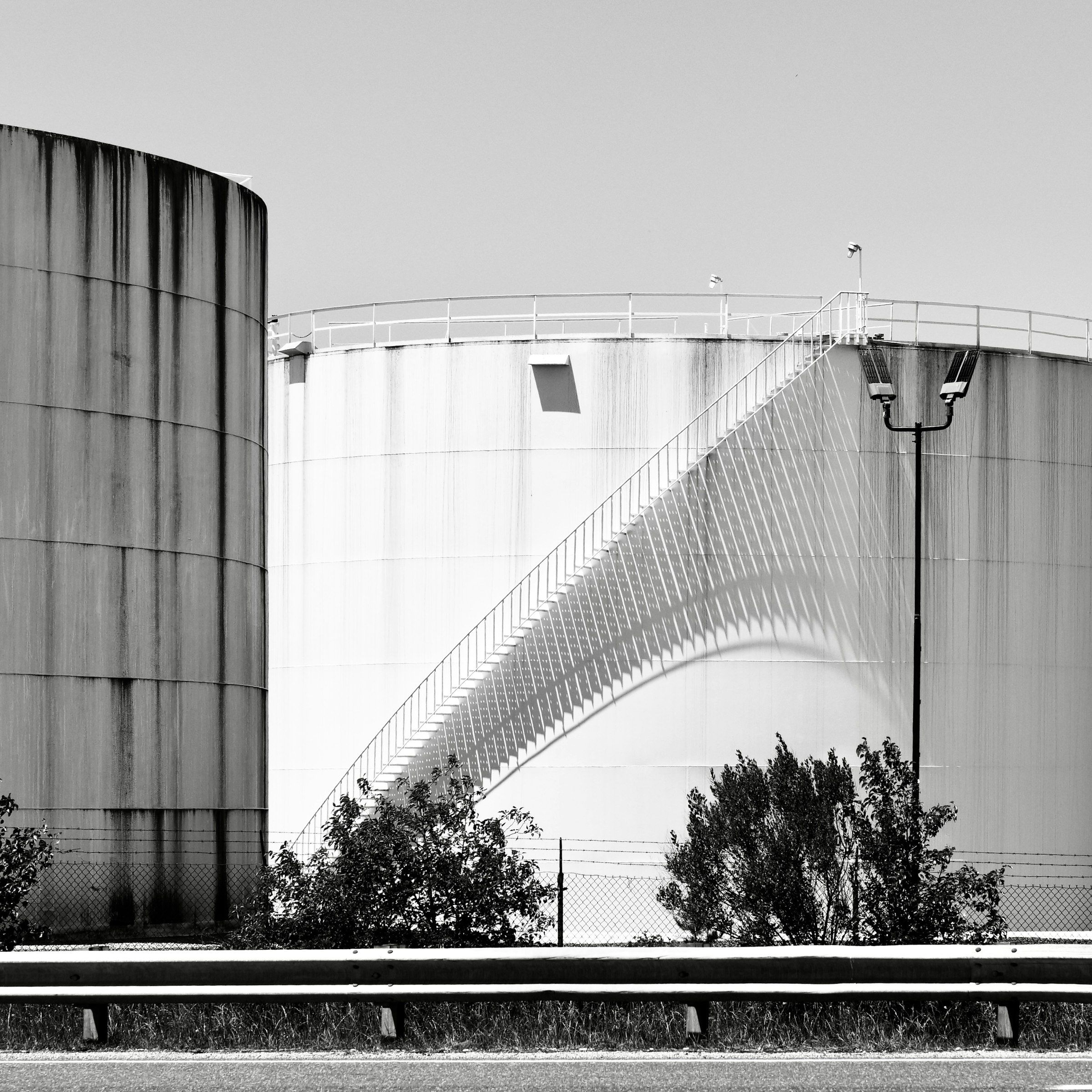
Oil and gas operations frequently involve high-value equipment, remote locations, high downtime costs, complex machinery, continuous operations, and difficult maintenance access.
Predictive maintenance can be applied across pumps, compressors, turbines, drilling equipment, pipelines, and other rotating equipment.
Common Applications
- Detect abnormal vibration before it becomes a mechanical failure
- Identify pressure anomalies across pipeline and processing equipment
- Monitor temperature changes that indicate developing wear
- Detect pump cavitation before internal components are damaged
- Identify motor degradation before full failure
- Predict bearing failure across rotating equipment
Predictive maintenance can also form part of a broader digital transformation strategy, alongside data integration and operational visibility initiatives.
For organizations evaluating continuous monitoring for critical rotating equipment, AI-powered predictive maintenance can provide a path from manual inspection schedules toward data-driven equipment health monitoring.
👉 For a deeper look at use cases, applications, and equipment scenarios specific to this industry, see Predictive Maintenance in Oil & Gas: Use Cases.
9. The Technology Behind Predictive Maintenance
Predictive maintenance is not a single technology. It is a layered system that connects equipment sensors, data infrastructure, analytics, and maintenance workflows.
| Layer | Technology / Function |
|---|---|
| Equipment & Sensors | Vibration, temperature, pressure, current and acoustic sensors |
| Data Collection | IoT gateways, SCADA, industrial systems and cloud platforms |
| Data Processing | Data pipelines, time-series databases and data engineering |
| Analytics & AI | Anomaly detection, machine learning, failure prediction and remaining useful life prediction |
| Operations | Maintenance alerts, work orders, dashboards, ERP and CMMS integration |
Technology alone is not enough. Predictive insights need to reach the maintenance workflow so teams can act on them through systems such as dashboards, CMMS platforms, and work order systems.
10. Predictive Maintenance Example: An Industrial Pump
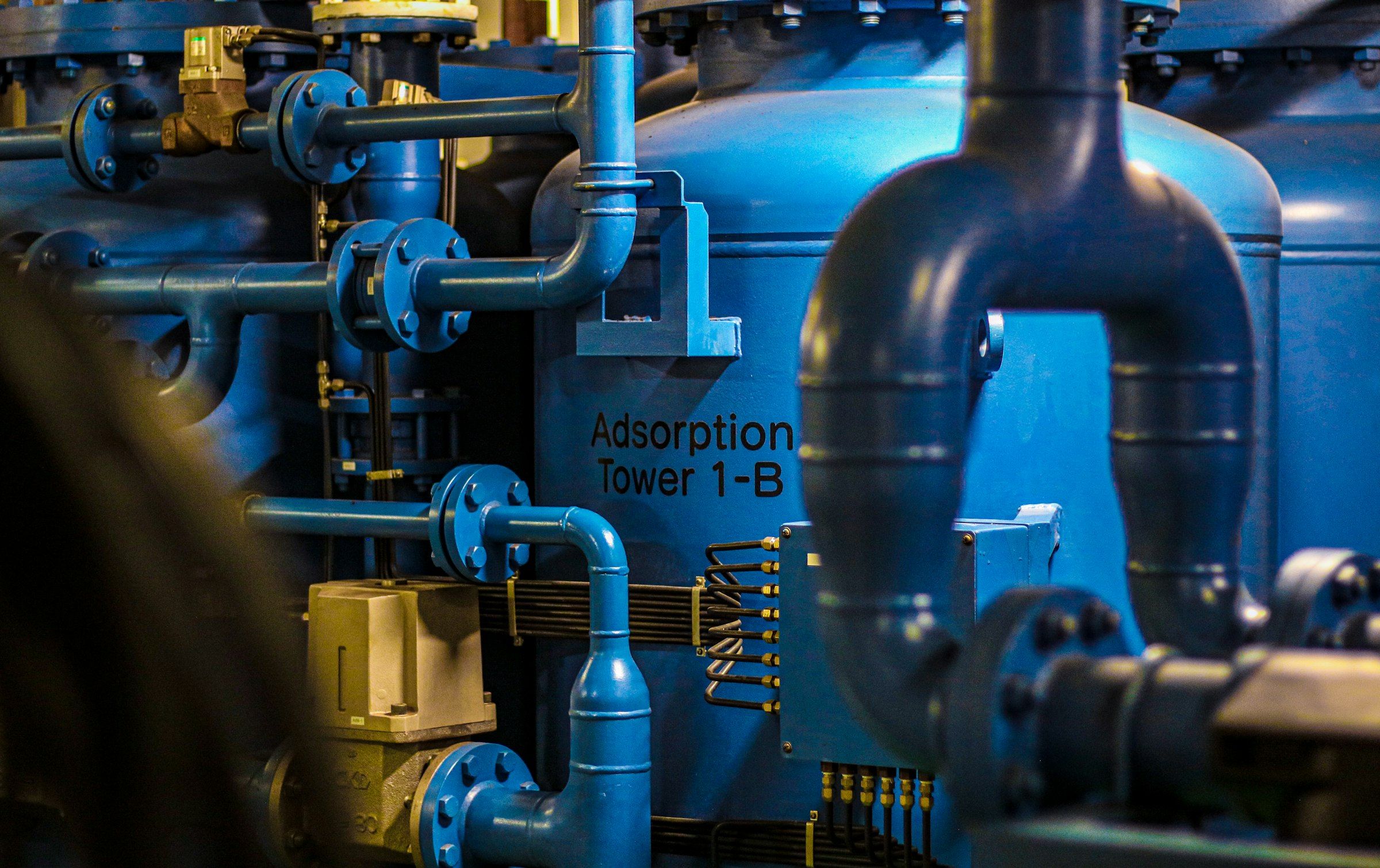
Consider an industrial pump operating continuously as part of a production line.
Preventive Approach
The pump is inspected every 90 days according to a fixed schedule, regardless of how it has performed during that period.
Predictive Approach
Vibration, temperature, and pressure are continuously monitored. The analytics system identifies an abnormal vibration trend developing over several days.
The maintenance team receives an alert before the next scheduled inspection would have identified the issue. Maintenance can then be scheduled during a planned downtime window.
A potential failure is addressed proactively rather than becoming an emergency shutdown between scheduled inspections.
This is an illustrative example and not a Perimattic client case study.
11. Can You Use Preventive and Predictive Maintenance Together?
Yes. Many organizations can use both approaches by matching the maintenance strategy to each asset's criticality, business value, and available data.
| Equipment Type | Maintenance Strategy |
|---|---|
| Low-cost assets | Preventive maintenance |
| Regulated equipment | Preventive maintenance plus required inspections |
| Critical rotating equipment | Predictive maintenance |
| High-value production assets | Predictive maintenance |
| New equipment without data history | Preventive maintenance initially, transitioning as data accumulates |
| Data-rich critical assets | Predictive maintenance |
An asset-by-asset approach can allow organizations to introduce predictive maintenance where it provides the most relevant value without attempting to replace every existing preventive maintenance process.
12. How to Choose the Right Maintenance Strategy
Before selecting a maintenance approach for a specific asset, consider five questions:
- What does equipment failure actually cost? Consider downtime, safety risk, and lost production.
- How predictable is the failure pattern?
- Do you already have operational data?
- How expensive is unnecessary maintenance?
- How critical is the equipment to overall operations?
A combination of high failure cost, high equipment criticality, and available sensor data can indicate that an asset is a strong candidate for predictive maintenance.
Conversely, low failure cost, a predictable maintenance schedule, and limited data can support a preventive maintenance approach.
13. Implementing Predictive Maintenance
A predictive maintenance program can be approached in six phases.
1. Identify Critical Assets
Select equipment based on downtime cost, failure frequency, asset value, and production dependency.
2. Assess Available Data
Review existing sensors, SCADA, IoT systems, maintenance history, ERP, and CMMS data.
3. Establish Equipment Baselines
Understand normal operating conditions, performance ranges, and typical behavior for each targeted asset.
4. Build Analytics Models
Implement anomaly detection, failure classification, and remaining useful life prediction for the failure modes that matter to each asset class.
5. Integrate Maintenance Operations
Connect predictive insights to maintenance teams, work order systems, dashboards, ERP, and CMMS platforms.
6. Monitor and Improve
Continuously improve data quality, model performance, alert relevance, and the maintenance decisions informed by the system.
14. Common Predictive Maintenance Implementation Mistakes
Starting With Too Many Assets
Trying to instrument an entire facility at once can make implementation unnecessarily complex. Starting with a small number of high-value, well-understood assets provides a more focused starting point.
Choosing Low-Value Equipment
Assets should be selected based on criticality and business impact rather than simply choosing equipment that is easiest to instrument.
Ignoring Maintenance History
Existing maintenance records can contain valuable information for understanding historical failure patterns. Consolidating and structuring this information can support predictive models.
Collecting Data Without Defining Decisions
Every data stream should have a clear purpose. Organizations should understand which maintenance decision the data is intended to support before collecting it at scale.
Building Dashboards Without Workflow Integration
A dashboard does not create value if maintenance teams do not see or act on the insights. Alerts should connect to the systems and workflows teams already use.
Not Involving Maintenance Teams
Maintenance and reliability engineers should be involved from the early design stages because they understand the operational context behind equipment alerts.
Treating AI Models as One-Time Projects
Equipment, processes, and operating conditions change over time. Predictive models therefore require ongoing monitoring, retraining, and improvement.
Ignoring Data Quality
Sensor drift, missing readings, and inconsistent logging can undermine model performance. Data quality checks should be part of the predictive maintenance pipeline.
15. Final Comparison
| Factor | Preventive Maintenance | Predictive Maintenance |
|---|---|---|
| Easy to implement | Yes | Requires more setup |
| Technology requirements | Low | High |
| Real-time monitoring | No | Yes |
| Failure prediction | No | Yes |
| Maintenance optimization | Limited | High |
| Unnecessary maintenance reduction | Limited | High |
| Critical asset suitability | Moderate | High |
| Data requirements | Low | High |
| Scalability | Simple, but costs scale with assets | Higher setup cost, with potential for efficient scaling |
Preventive maintenance remains useful where simplicity, predictable schedules, and low implementation requirements are important. Predictive maintenance becomes more relevant as equipment criticality, downtime costs, available operational data, and failure complexity increase.
16. Final Thoughts
Preventive maintenance remains an appropriate strategy for many industrial assets, particularly equipment that is low-cost, predictable, and non-critical.
Predictive maintenance becomes increasingly relevant when equipment is critical, downtime is expensive, operational data is available, asset fleets justify shared infrastructure, or failure patterns are too complex for a fixed calendar to capture reliably.
The choice between predictive maintenance and preventive maintenance therefore does not have one universal answer. The strategy should be evaluated asset by asset using equipment criticality, failure patterns, data availability, maintenance costs, and operational requirements.
The goal is not simply to choose the most advanced maintenance technology. It is to match the maintenance strategy to the economics, criticality, and operational reality of the equipment.
Turn Equipment Data Into Earlier Maintenance Decisions
Perimattic helps organizations use AI, predictive analytics, and operational data to identify equipment degradation, detect anomalies, and prioritize maintenance based on actual machine condition rather than the calendar.


