AI-Powered Lung Disease Detection for a Healthcare Provider in India
An AI system that analyses DICOM scans for lung disease, integrates with PACS and gives radiologists a second opinion, cutting scan analysis time by 60% for a multi-site Indian healthcare provider.
- Industry:
- Healthcare & Medical Diagnostics
- Tech stack:
- Python, OpenCV, FastAPI +5 more
- Updated:
- Faster DICOM scan analysis
- 60%
- Compliant storage, processing and transfer
- HIPAA
- Integrated image retrieval and storage
- PACS
- Of scans a year (design capacity)
- Millions
Case study summary
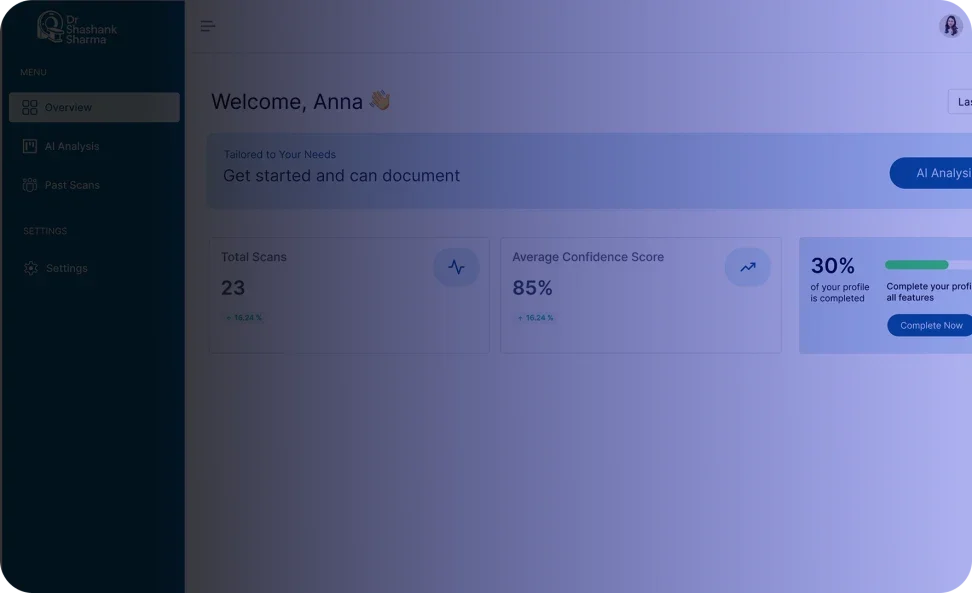
Perimattic built an AI-powered lung disease detection system for a leading Indian healthcare provider that runs multiple clinics and diagnostic centres. Trained on lung disease datasets specific to Indian patient demographics and validated with radiologists, it processes DICOM scans at scale, integrates with existing PACS and hospital systems, auto-generates diagnostic summaries and gives radiologists an AI second opinion. Time to analyse DICOM scans fell by 60%.
About the client
The client is a leading healthcare provider in India focused on affordable, technology-driven medical care. It operates multiple clinics and diagnostic centres and aims to improve early disease detection and patient outcomes. It needed to improve diagnostic accuracy, reduce manual workload and stay compliant while handling large volumes of patient imaging data.
The challenge: thousands of DICOM files a day
Large volumes of medical imaging
Radiologists struggled to manage and interpret thousands of DICOM files every day.
Manual diagnostics
Heavy reliance on manual interpretation delayed lung disease detection and treatment planning.
Accuracy and compliance
Diagnosis had to be precise while maintaining HIPAA compliance and meeting Indian health data requirements.
How Perimattic built the lung disease detection system
Perimattic combined data research, computer vision development and workflow integration, from validating training data and annotation quality with radiologists to plugging the system into PACS and hospital systems.
Data and research
- Researched lung disease datasets specific to Indian patient demographics
- Partnered with radiologists to validate training data
- Ensured data compliance with HIPAA and Indian health data laws
- Applied preprocessing to improve image clarity and annotation quality
DICOM file processing and integration
- Built a pipeline to parse, process and analyse DICOM files at scale
- Integrated with existing PACS for seamless retrieval and storage
- Automated anonymisation to protect patient data
- Implemented metadata tagging for faster case retrieval and audit readiness
Workflow optimisation
- Designed APIs for real-time integration with hospital systems
- Reduced reporting delays by auto-generating diagnostic summaries from DICOM scans
- Built in scalability to expand across multiple diagnostic centres
- Gave radiologists AI-driven second opinions to minimise oversight risk
Results: 60% faster DICOM scan analysis
Faster diagnosis
Time to analyse DICOM scans fell by 60%, enabling quicker treatment decisions.
Improved accuracy
Detection rates for lung disease improved, lowering false negatives.
Compliance
Sensitive medical images are stored, processed and transferred in line with HIPAA.
Workflow efficiency
Automated PACS integration removed manual image-handling steps.
Scalability
The system is designed to support millions of DICOM scans a year without performance degradation.
Services behind this project
- Computer Vision DevelopmentCustom computer vision for medical imaging, visual apps and inspection.
- AI Development ServicesProduction-grade AI systems built to your workflow, from scoping to deployment.
- AI Data AnnotationExpert-validated training data and labeling for AI models.
- AI observability for HIPAAWhat HIPAA expects from AI telemetry, and the evidence to keep.
- AI for HealthcareHow we apply AI across this industry.
Questions about this project
How does the AI lung disease detection system work?
A pipeline parses and analyses DICOM scans pulled from the provider's PACS, auto-generates diagnostic summaries and gives radiologists an AI second opinion. The underlying models were developed on lung disease datasets specific to Indian patient demographics and validated with radiologists.
Does the AI replace radiologists?
No. It supports them with AI-driven second opinions and auto-generated summaries, reducing reporting delays and the risk of oversight.
How is patient data protected?
Scans are anonymised automatically, data is stored, processed and transferred in line with HIPAA and Indian health data laws, and metadata tagging keeps cases audit-ready.
What does it cost to implement AI in healthcare?
It depends on data preparation, integration with systems such as PACS, and compliance requirements. Our guide to the cost of implementing AI in healthcare covers typical budgets.