MLOps Consulting and ML Frameworks
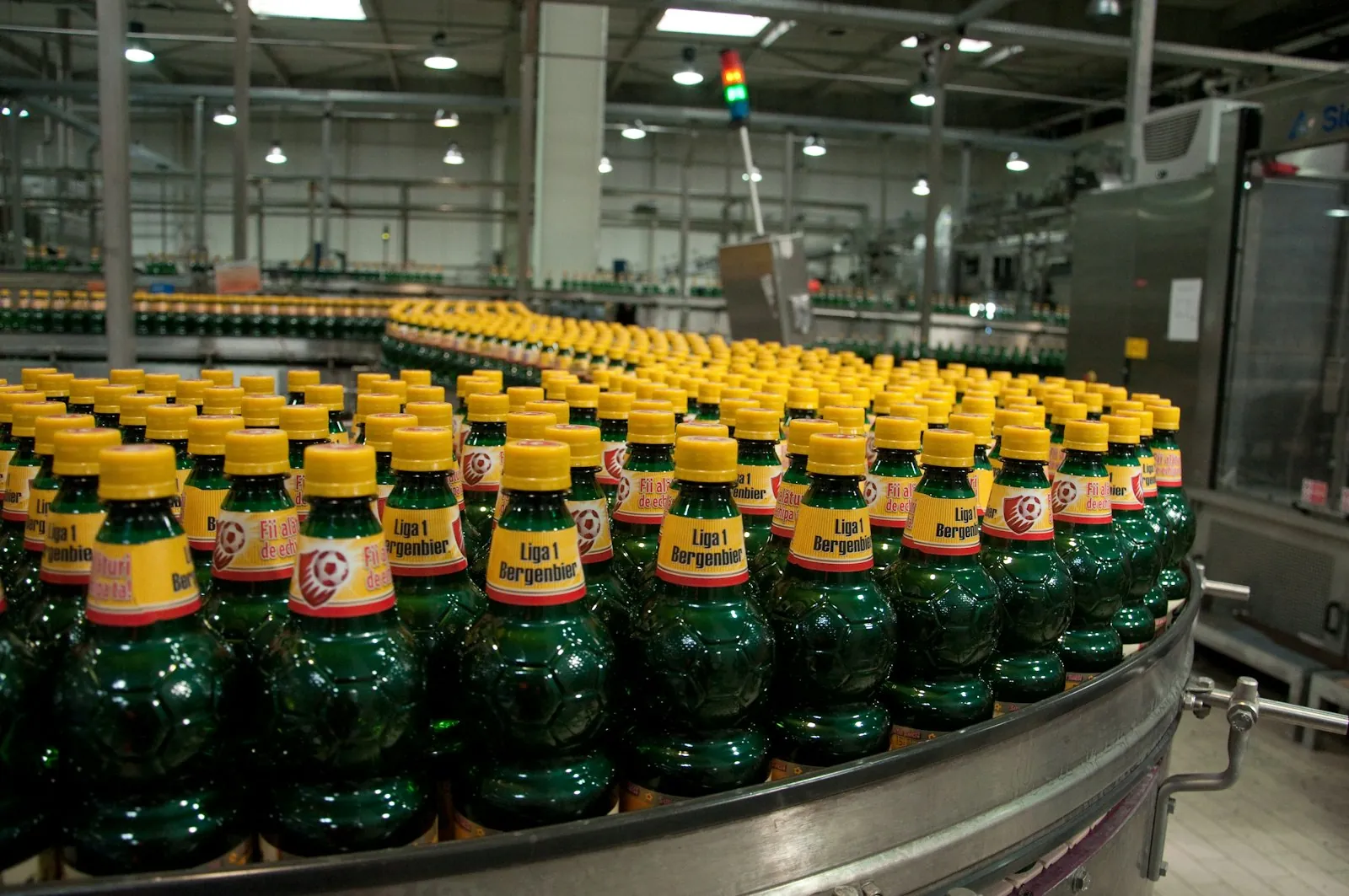
The frameworks we train models with and the tooling that takes them to production: versioned, monitored and retrainable. Our defect detection proof of concept, built with Python, PyTorch and OpenCV, made the right call on all 51 evaluation bottles.
- Deep learning with PyTorch and TensorFlow
- Computer vision with OpenCV and YOLO
- Classic ML with scikit-learn and XGBoost
- Experiment tracking with MLflow and Weights & Biases
- Training on GPUs, Vertex AI, Azure ML and SageMaker
What is MLOps, and why does it matter?
MLOps is the practice of taking machine learning models from a notebook to production and keeping them working there: versioning data and models, automating training and deployment, and monitoring accuracy so drift is caught early. Without it, a model that scored well in testing quietly degrades once real data changes.
Our ML work is mostly computer vision for manufacturing and healthcare. The framework matters less than the discipline around it: held-out evaluation data, honest accuracy figures with confidence bounds, and a repeatable path from a new model version to production.
Last updated by the Perimattic engineering team.
Which ML frameworks and MLOps tools do we use?
Each tool is marked honestly: named in a published client project, or one we work with but have no published project for yet.

PyTorch
Used in client projectsTrained the cap locator and seam check models in the bottle-cap defect detection proof of concept. Our default for new deep learning work because of its research ecosystem and pretrained models.

TensorFlow
We work with itWe work in TensorFlow when a client already has models or tooling built on it, or needs TensorFlow Lite for on-device inference.
Computer vision libraries
Used in client projectsOpenCV handles image and frame processing in the bottle-cap inspection and the lung-disease detection system. We use YOLO-family detectors for object detection and Tesseract for OCR where it fits.
NumPy and classic ML
Used in client projectsNumPy sits under the bottle-cap pipeline. For tabular problems such as forecasting, scoring and classification, gradient-boosted models in XGBoost or LightGBM often beat deep learning at a fraction of the cost.
Speech and NLP libraries
We work with itspaCy for entity extraction and text pipelines, and Whisper for speech-to-text, when a task does not need a full large language model.

MLflow
We work with itExperiment tracking and a model registry, so every production model can be traced back to its data, code and metrics.

Weights & Biases
We work with itAn alternative to MLflow for teams that want hosted experiment tracking and richer visual comparisons between training runs.
Training infrastructure
We work with itGPU training on the cloud the client already uses. For SageMaker work, see our AWS AI/ML services.
What do we build with this stack?
Six kinds of ML work make up most projects. Most start with a proof of concept against agreed accuracy targets.
Visual inspection
Defect detection on production lines, as in the bottle-cap proof of concept that caught all 24 faulty bottles.
Medical imaging
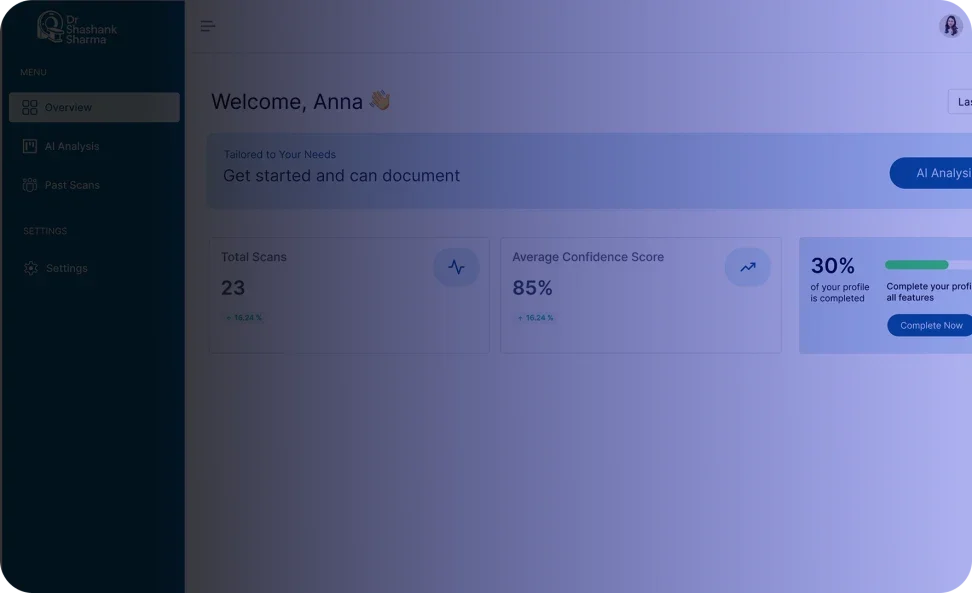
Second-opinion models for scans, integrated with PACS, as in the lung-disease detection system.
Forecasting and scoring
Demand forecasts, risk scores and classifiers on tabular data, usually with classic ML.
Training data pipelines
Frame sampling, labelling and dataset versioning, the work behind every reliable model.
Model deployment
Turning trained models into versioned, containerised APIs with rollback.
Monitoring and retraining
Accuracy and drift monitoring with a retraining path, so models keep up with real data.
ML choices we make most often
Most of the cost and risk in ML is decided before training starts. These are the calls we make on most projects.
PyTorch or TensorFlow?
PyTorch for new work; TensorFlow when your existing models or devices use it
PyTorch has the larger pool of current pretrained models. Rewriting working TensorFlow code rarely pays back.
Deep learning or classic ML?
Classic ML for tabular data; deep learning for images, audio and text
Gradient-boosted trees are cheaper to train, explain and run on structured data.
Custom model or a hosted AI API?
A hosted API when it meets the accuracy target; a custom model when it does not
We test the cheapest option first against your own data before training anything.
MLflow or Weights & Biases?
MLflow when you want to self-host; Weights & Biases for a hosted service
Both track experiments well. The deciding factor is where your data is allowed to go.
| The question | What we usually pick | Why |
|---|---|---|
| PyTorch or TensorFlow? | PyTorch for new work; TensorFlow when your existing models or devices use it | PyTorch has the larger pool of current pretrained models. Rewriting working TensorFlow code rarely pays back. |
| Deep learning or classic ML? | Classic ML for tabular data; deep learning for images, audio and text | Gradient-boosted trees are cheaper to train, explain and run on structured data. |
| Custom model or a hosted AI API? | A hosted API when it meets the accuracy target; a custom model when it does not | We test the cheapest option first against your own data before training anything. |
| MLflow or Weights & Biases? | MLflow when you want to self-host; Weights & Biases for a hosted service | Both track experiments well. The deciding factor is where your data is allowed to go. |
Which ML systems have we shipped?
These case studies list PyTorch, OpenCV or NumPy in their published tech stack.
Honest accuracy
We publish results with sample sizes and confidence bounds, and say what is not yet proven.
Built for the line, not the lab
Models are designed around real camera positions, frame rates and integration with existing systems.
Production from the start
Containerised models, versioned data and monitoring are part of the build, not an afterthought.
How do we deliver ML and MLOps projects?
Five stages, from scoping call to release. Every engagement is priced before the work starts.
- 1
Scoping call
Goals, constraints and the existing stack, with a written scope and fixed price before any build.
- 2
Architecture
Stack choices written down with the trade-offs, reviewed with your team before code starts.
- 3
Build in sprints
Short sprints with a working demo at the end of each, on a staging environment you can use.
- 4
Release
CI/CD, automated tests and monitoring in place before production traffic arrives.
- 5
Handover or support
Documented code and runbooks for your team, or ongoing support and maintenance from ours.
On ML projects we agree accuracy targets and a held-out evaluation set before training, and report results with confidence bounds rather than a single headline number.
Which services use this stack?
Further reading and free tools


ML and MLOps: common questions
What is the difference between MLOps and DevOps?
DevOps automates how code is built and shipped. MLOps adds the parts specific to models: versioning data, tracking experiments, evaluating accuracy before release and monitoring for drift afterwards.
Which ML framework do you use?
PyTorch for most new deep learning work, OpenCV for image processing, and scikit-learn or XGBoost for tabular data. We work in TensorFlow when a client's existing models use it.
How do you prove a model works?
We test on data the model never saw in training and report results with confidence bounds. The bottle-cap proof of concept, for example, reports at least 94.3% accuracy at 95% confidence, not just 51 of 51.
Can you put our existing models into production?
Yes. We wrap them as versioned, containerised APIs, add monitoring for accuracy and drift, and set up a path to retrain and redeploy.
Do we need MLflow or Weights & Biases?
Once more than one person trains models, yes. Experiment tracking is how you know which data and settings produced the model in production.