
Computer Vision Development Services That Turn Images and Video Into Decisions
Perimattic provides computer vision development services for teams that need images or video turned into reliable decisions. We define the use case, prepare the data, train and validate models, deploy them on edge, cloud or on-premises hardware, and connect results to your systems, from factory inspection to medical imaging.

What Are Computer Vision Development Services?
Computer vision is the branch of AI that lets software understand images and video. Computer vision development services take that capability from a demo to a system people rely on every day: one that sees the right things, in your conditions, fast enough to act on, and feeds its results into the tools your teams already use.
Most of the work is not the model. It is deciding what the system must detect, getting images that represent real conditions, measuring accuracy honestly, deploying where the cameras are, and keeping accuracy high as products, scenes and lighting change.
What Computer Vision Solutions Do We Build?
Six types of computer vision system, from inline factory inspection to medical imaging. Manufacturing inspection is our deepest specialisation.



Which Industries Use Our Computer Vision Development?
Where we have delivered computer vision systems, and where the same approach applies.
| Industry | Typical computer vision use | Our work |
|---|---|---|
| Manufacturing | Surface, weld, assembly and dimensional inspection; packaged inspection through Intellyx Vision QC | Delivered, including weld seam inspection |
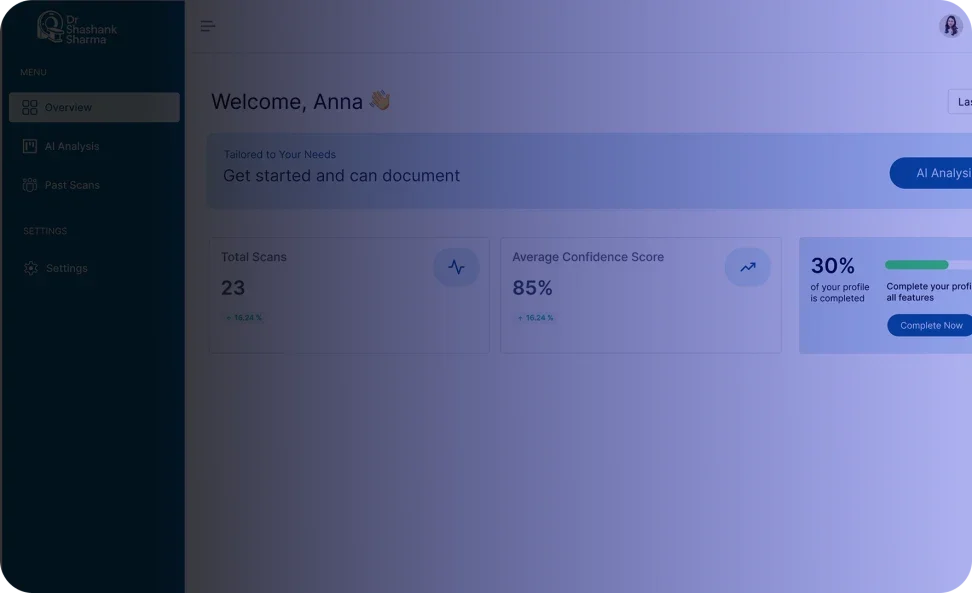
| Healthcare | Lung disease detection from chest X-rays | Delivered (case study) |
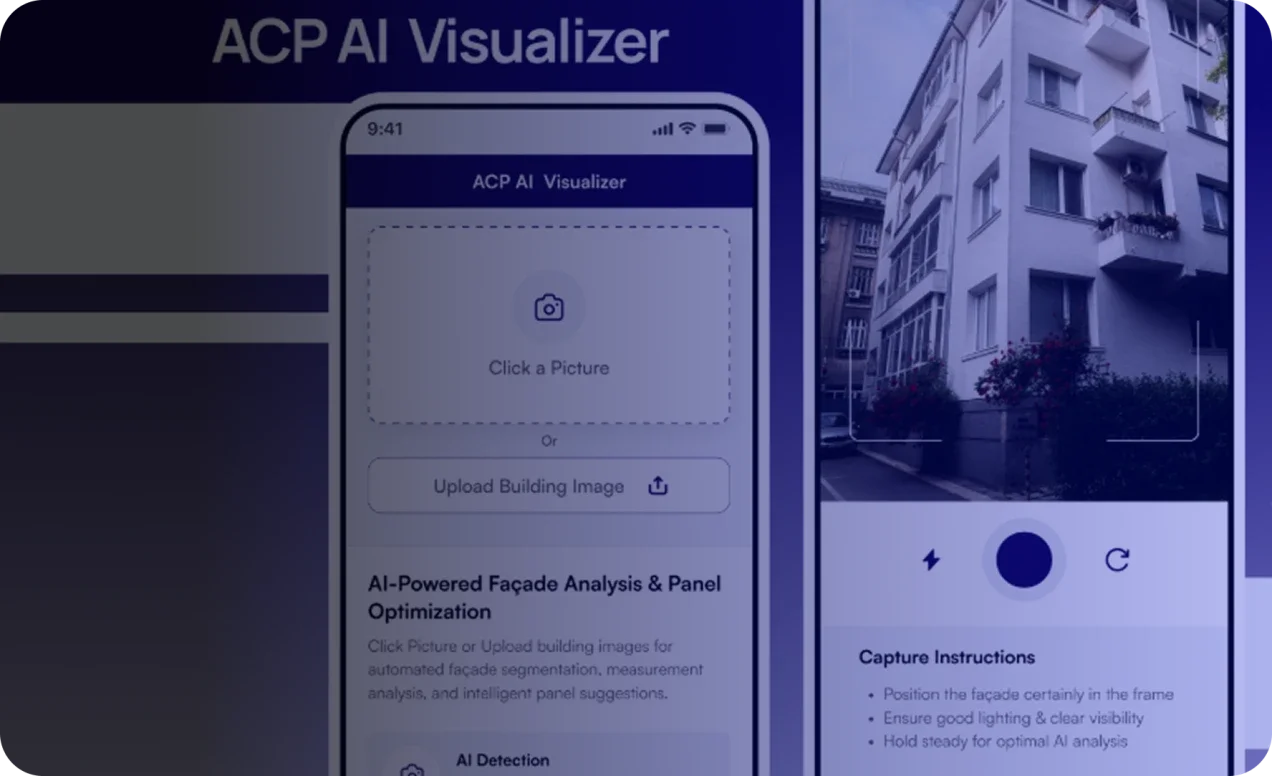
| Building materials | Visualising cladding panels on site photos to speed up sales | Delivered (case study) |
| Retail | Shelf monitoring, planogram checks, footfall, queues, checkout loss prevention | Capability |
| Plant security and HR | Gate ANPR, face recognition attendance and zone access | Intellyx modules |
| Infrastructure and agriculture | Drone imagery for inspection, mapping and crop health | Capability |
Custom Computer Vision Development or Off-the-Shelf Software?
Off-the-shelf vision software is quicker when your task is common. Custom development wins when your products, images or workflow are specific to you.
| Area | Custom computer vision | Off-the-shelf software |
|---|---|---|
| Fit to your task | Trained on your own products, defects, scenes and images | Built for common tasks; may miss what is specific to you |
| Integration | Results flow into your ERP, MES, QMS, HR or apps | Usually its own dashboard and limited connectors |
| Data location | Edge, on-premises or your cloud account | Often the vendor's cloud |
| Time to first result | Weeks for a proof of concept on your data | Days if the task matches the product |
| Ownership | You own the models, data pipeline and code | Licensed; roadmap set by the vendor |
How Does a Computer Vision Development Project Work?
Six stages, with working results on your own data at each step, so you can check accuracy before committing to the next.
- 01
Use Case Discovery
We define what the system must see, the decision it supports and how success will be measured, such as detection rate or time saved.
- 02
Data and Camera Audit
We review the images and video you already have, camera positions and lighting, and plan what still needs to be captured and labelled.
- 03
Proof of Concept
We train a first model on your own data and measure it against the agreed targets before you commit to full development.
- 04
Model Development and Integration
We build production models and connect their results to your applications, workflows, alerts and data systems.
- 05
Validation
We test accuracy, speed and false alarms on real data and tune thresholds with the people who will rely on the system.
- 06
Deployment and Monitoring
We deploy to edge, cloud or on-premises hardware, track accuracy in production and retrain models as products and conditions change.
Which Technologies Do We Use for Computer Vision?
| Layer | Tools and approaches |
|---|---|
| Models and training | Python, PyTorch, OpenCV, YOLO object detection, classification and segmentation models |
| Data | Image and video capture pipelines, annotation workflows, dataset versioning |
| Edge deployment | NVIDIA Jetson and other edge devices, containerised models with Docker |
| Cloud and on-premises | AWS, private servers inside your network, batch processing for large image sets |
| Integration | REST APIs, PLC and OPC-UA for factory lines, MQTT, connectors to ERP, MES, QMS and HR systems |
Explore More of What We Do

Learn More Before You Build

7 Computer Vision Use Cases in Retail
Seven computer vision applications transforming retail — from shelf analytics to loss prevention and checkout.
Read article
Drone Software Development: Architecture, Use Cases & Benefits
How drone software is built: the flight, ground, fleet and data layers, PX4 and ArduPilot, use cases and the rules in India and the US.
Read articleComputer Vision Development Services: Frequently Asked Questions
What are computer vision development services?
Computer vision development services cover the full build of a system that understands images or video: defining what it must detect, choosing cameras, collecting and labelling data, training and validating models, deploying them on edge, cloud or on-premises hardware, and connecting the results to the software your teams already use. Good providers also set up monitoring and retraining so accuracy holds after launch.
What kinds of computer vision solutions do you build?
We build visual inspection and defect detection for production lines, medical image analysis, visual product and sales apps, video analytics for retail and operations, number plate recognition and face recognition for site access through our Intellyx platform, and analysis of drone and aerial imagery. Manufacturing inspection is our deepest specialisation.
Should we build custom computer vision or buy off-the-shelf software?
Buy when a packaged product already handles your exact task, such as standard barcode reading or a common inspection that a vendor supports out of the box. Build custom when your products, defects, images or workflow are specific to you, when results must flow into your own systems, or when data has to stay on your premises. Many projects combine a proven component with custom models and integration.
How much data do we need to train a computer vision model?
It depends on how varied the task is. A narrow task under controlled lighting, such as checking one part on one line, can start with a few hundred labelled images per class, while open-world tasks such as video analytics in busy stores need far more. We start with a data audit, then use a proof of concept to show whether the data you have is enough before full development.
Can computer vision models run on-premises or at the edge?
Yes. Many of our systems run on edge devices next to the cameras, such as NVIDIA Jetson units, so results arrive in milliseconds and keep working if the network drops. Where data must stay inside your network, models run on your own servers. Cloud deployment suits batch work such as analysing drone surveys or large image archives.
How long does a computer vision project take?
A proof of concept on your own images usually takes a few weeks. A production system, including integration and validation, typically takes 8 to 24 weeks depending on the number of camera points, the variety of objects or defects, and the systems it must connect to. We deliver in stages so you can check accuracy on real data before committing to the next phase.
How do you handle privacy when computer vision processes people?
When images can identify people, such as staff, shoppers or vehicle owners, they are personal data under India's Digital Personal Data Protection Act, 2023 and similar laws elsewhere. We design for that: anonymous counting where identity is not needed, clear notice and consent where it is, on-site processing, short retention periods and access controls.
Have Images or Video That Should Be Making Decisions for You?
Tell us what you need the system to see, where the cameras are and what should happen with each result. We will tell you honestly whether computer vision fits, what data it needs and how to prove it on your own images first.