
Target Plus seller profit after referral fees and returns
Brandnata connects to Target Plus through API credentials issued for your approved Target Plus seller account, in about 5 minutes. The connection is read-only by default, and Target Plus data is reconciled with every other channel you connect in one dashboard.
Target Plus is Target's invite-only marketplace, and Brandnata brings your Target Plus orders, returns and item data in beside every other channel. Your contracted referral rate, the shipping you pay to deliver each order and the cost of returns are subtracted, so Target Plus profit per SKU sits next to Walmart, Amazon and your own store.
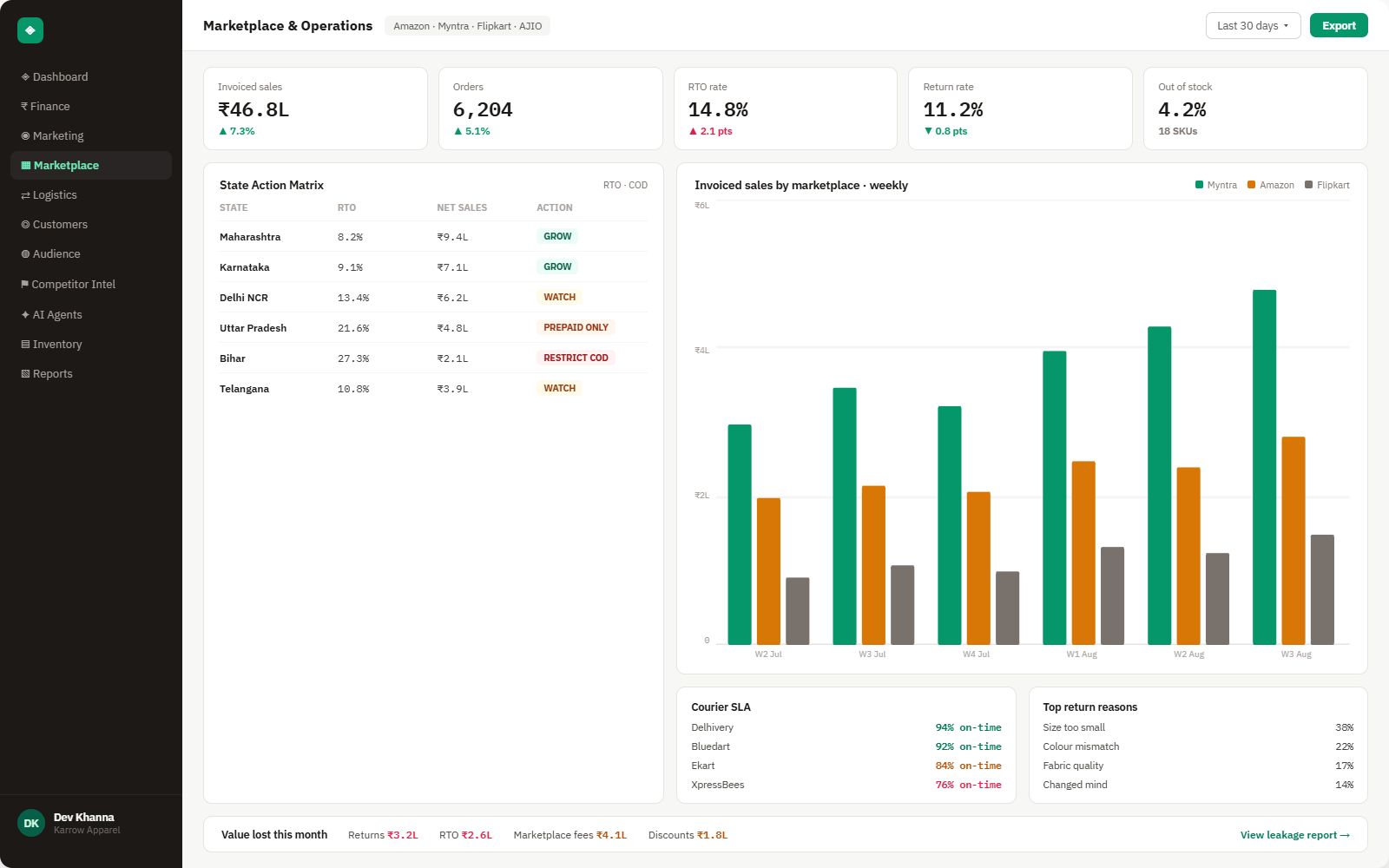
Everything Target Plus sends into Brandnata
Orders, returns and item status sync several times a day through the Target Plus seller API. Target doesn't publish its referral rates, so Brandnata applies the rate from your seller agreement, which you enter once.

Orders & shipments
Target Plus orders with item, quantity and price, plus the carrier and tracking you shipped them with.
Returns
Returned items and refunds by SKU, so the cost of a return lands on the product that caused it.
Items
Your Target Plus items with price and status, matched to your own SKUs and product costs.
Referral rate
The rate in your Target Plus agreement, applied to each order because Target has no public fee table.
How Brandnata uses Target Plus data
Target Plus orders are treated like orders from any other channel. Brandnata applies your contracted referral rate, adds label costs from your shipping connection and the cost of returns, then compares each Target Plus SKU with the same product on Walmart, Amazon and your storefront.

Target Plus data feeds Brandnata's anomaly alerts and AI agent suggestions. The connection itself only reads data and never changes anything in Target Plus.
What you can do with Target Plus in Brandnata
Specific, Target Plus-native use cases, not a generic list that applies to every connector the same way.
See what each order leaves after the referral fee, the label you paid for and any return, instead of judging Target Plus on gross sales.
Target guests get free shipping on orders over $35 and free returns, while the seller covers those costs. Brandnata shows which SKUs still make money once they're paid.
Compare margin per order on Target Plus, Walmart Marketplace and Amazon using one profit definition, after each channel's fees and returns.
Rank the items you list on Target Plus by profit and return rate, so the next items you propose to Target are the ones that earn the most.
Where Brandnata + Target Plus fits
Other ways teams currently piece this data together, and where each one runs out of reach.
| Approach | Coverage | Where it falls short |
|---|---|---|
| Brandnata + Target Plus · this page | Target Plus orders and returns with your referral rate, shipping and product costs applied, compared with your other channels | N/A |
| Target Plus seller portal (native) | Order management and reporting for your own Target Plus account | Covers Target Plus only, without your product costs, shipping labels or ad spend, so margin per SKU is worked out elsewhere |
| Marketplace listing tools (e.g. Shopify Marketplace Connect) | Listings, inventory and orders synced between your store and Target Plus | Designed to move listings and orders, not to calculate profit after referral fees, shipping and returns |
| Spreadsheets | Target Plus order downloads combined with a referral rate and label costs by hand | Returns arrive weeks after the sale, so a sheet built at month end understates their cost |
Target Plus works alongside every other connector
Data from Target Plus doesn't sit in isolation, it's matched against orders, customers and spend from every other platform you connect, so the full picture shows up automatically.
Related connectors
Brands using Target Plus usually connect these too.
Orders, returns, WFS and settlement fees from Walmart, with net profit per order.
Marketplace sales, fees, ads and inventory across every Amazon region.
Orders, revenue, products, customers and inventory, synced live.

ShipStation labels, postage, carriers and delivery status, with shipping cost added to order profit.
Target Plus integration FAQs
Target Plus details on this page were last checked against Target Plus's own documentation on .
How do I connect Target Plus to Brandnata?
You need an approved, live Target Plus seller account first, because the marketplace is invite-only. Generate API credentials for that account in Target's seller tools, enter them in Brandnata, then add the referral rate from your agreement. If your Target Plus listings run through Shopify Marketplace Connect, those orders can also arrive through your Shopify connection.
How do I become a Target Plus seller?
By application and invitation. Target describes Target Plus as a curated, invite-only marketplace whose partners are chosen by its in-house team. Brands can apply through the seller application on plus.target.com, and US-based Shopify merchants can apply from the Marketplace Connect app. Approval is Target's decision, whichever route you use.
What fees does Target Plus charge sellers?
Target doesn't publish its Target Plus referral rates; they're set in each seller's agreement. Its seller site says there's no monthly seller fee, and that shipping, returns and fulfillment costs are the seller's responsibility. Brandnata applies your contracted rate to every order and adds the shipping and return costs you actually paid.
Is Target Plus available outside the United States?
No. Target Plus sells to Target.com shoppers in the US, and Shopify lists it as a United States only marketplace in Marketplace Connect. Brandnata itself isn't tied to a country, so a team working from India or elsewhere can report on a US Target Plus account, provided the seller account meets Target's eligibility rules.
How is Target Plus different from Walmart Marketplace?
Target Plus is curated and invite-only, while Walmart Marketplace takes applications from a much wider range of sellers. Walmart publishes referral fees by category and runs its own fulfillment service, WFS, whereas Target Plus referral rates are agreed privately. Brandnata reports both channels on the same profit basis, so you can compare them per SKU.
Who pays for shipping and returns on Target Plus?
The seller. Target Plus sellers ship orders themselves, and Shopify's setup guide limits Target Plus shipping to UPS, USPS and FedEx. Guests get free shipping on orders over $35 and free returns, but Target's seller site puts those costs on the seller. Brandnata charges label and return costs to the order they belong to.
Can Brandnata change my Target Plus listings or prices?
No. Brandnata only reads orders, returns and item data from Target Plus. It doesn't create or edit listings, change prices or inventory, or update order status, and nothing it does is visible to Target guests. Deleting or rotating the API credentials you gave Brandnata ends its access.

Connect Target Plus in about 5 minutes
Connects through API credentials issued for your approved Target Plus seller account. Read-only to start, with your first reconciled numbers within a day.