Flutter App Development
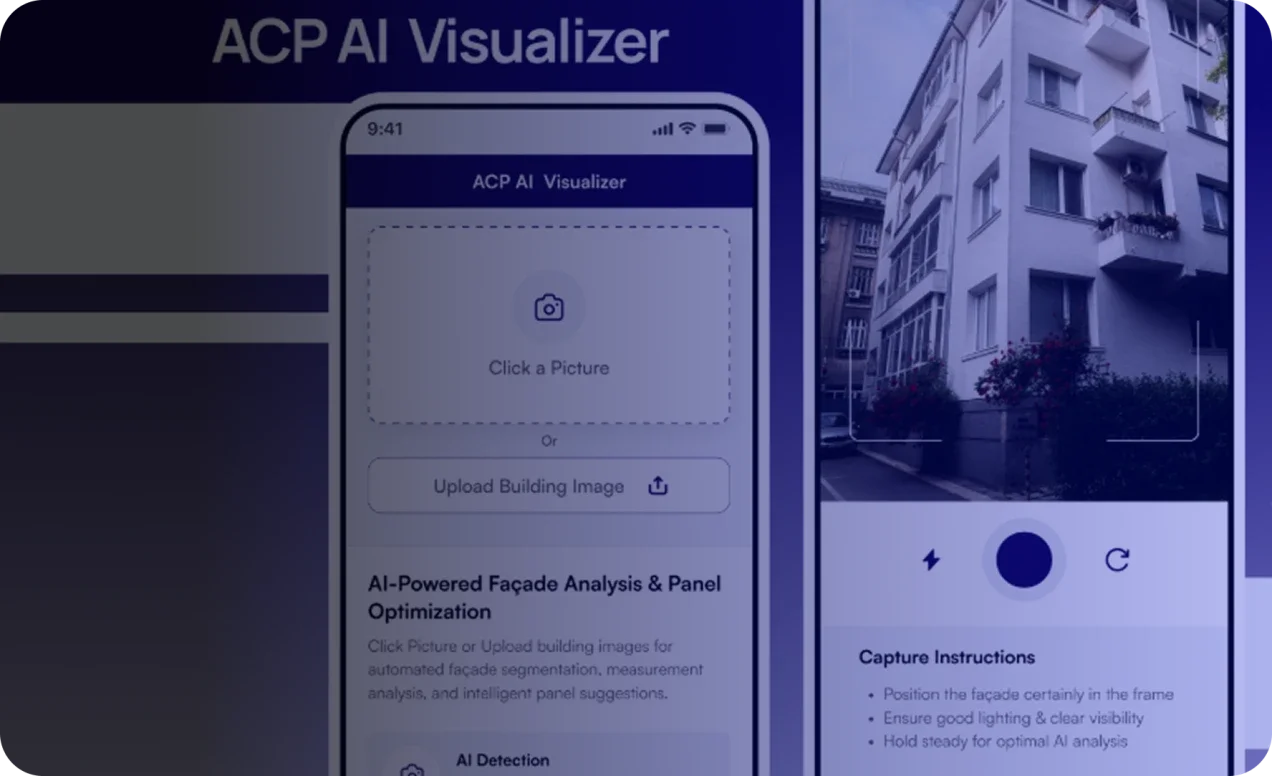
Cross-platform apps for iOS and Android from one Flutter codebase, and native Swift and Android work when a project needs it. Our published mobile work includes an AI visualization app that nearly tripled leads for a top-3 glazing manufacturer.
- iOS and Android apps from one Flutter codebase
- Camera and AI features that run in sales meetings
- Subscription content apps alongside a web front end
- Native iOS work in Swift and Objective-C
- App Store and Google Play release and updates
What is Flutter, and when do we use native instead?
Flutter is Google's framework for building iOS, Android and web apps from one Dart codebase, with its own rendering engine so the app looks and behaves the same on every device. We use it for most new apps, and native Swift or Kotlin when an app depends on deep platform features or extends an existing native codebase.
Two of our published mobile projects are Flutter: The Moment's iOS and Android apps, and an AI panel-visualization app for a glazing manufacturer. Two are native iOS and Android work for The Credit Pros and Staffing Future, using Swift, Objective-C and RxJava.
Last updated by the Perimattic engineering team.

Which mobile tools do we use, and where?
Flutter for most new apps, native languages where a project calls for them. Each is marked by where we can show it.
Flutter
Used in client projectsUsed for The Moment's iOS and Android apps from a single codebase, and for the glazing manufacturer's AI panel-visualization app used live in customer meetings.
Swift
Used in client projectsNative iOS development on The Credit Pros and Staffing Future projects. We choose Swift for new native iOS code.
Objective-C
Used in client projectsPart of the iOS stack on The Credit Pros and Staffing Future projects. We work in Objective-C when extending older iOS codebases rather than rewriting them.
RxJava
Used in client projectsUsed for reactive, event-driven code in Android apps on The Credit Pros and Staffing Future projects.
What do we build for mobile?
Six kinds of app make up our mobile work. Most connect to a Node.js or Python back end the same team builds.
AI and camera apps
Apps that capture a photo and return an AI result on the spot, like façade previews during a sales meeting.
Content and subscription apps
Publishing apps that share a CMS and subscriptions with the website, as for The Moment.
Customer portals on mobile
Account, payment and status apps for customers of regulated businesses, with security built in from the start.
Field and sales tools
Apps for teams on the move: quotes, visualizations and data capture that work on a phone or tablet.
Native iOS and Android work
Extending existing Swift, Objective-C or Android codebases without a risky rewrite.
Moving native apps to Flutter
Replacing two separate native apps with one Flutter codebase, screen by screen.
Flutter, native or a web app?
The right choice depends on the features you need and the code you already have.
Flutter or native?
Flutter for most new apps; native when an app leans on deep platform features
One codebase halves build and maintenance work. Native still wins for some hardware and OS integrations.
Flutter or React Native?
Flutter, unless your team already has a React Native codebase
Flutter renders the UI itself, so screens look the same on every device; we extend React Native where it already exists.
Rewrite or extend an existing native app?
Extend first; rewrite only when the old code blocks every change
Extending working code is usually cheaper and safer than starting again.
App or responsive website?
A responsive web app if users only need a browser; an app for camera, offline or push
App stores add review time and cost; only pay for them when users need app features.
| The question | What we usually pick | Why |
|---|---|---|
| Flutter or native? | Flutter for most new apps; native when an app leans on deep platform features | One codebase halves build and maintenance work. Native still wins for some hardware and OS integrations. |
| Flutter or React Native? | Flutter, unless your team already has a React Native codebase | Flutter renders the UI itself, so screens look the same on every device; we extend React Native where it already exists. |
| Rewrite or extend an existing native app? | Extend first; rewrite only when the old code blocks every change | Extending working code is usually cheaper and safer than starting again. |
| App or responsive website? | A responsive web app if users only need a browser; an app for camera, offline or push | App stores add review time and cost; only pay for them when users need app features. |
Which mobile apps have we shipped?
These case studies list Flutter, Swift, Objective-C or RxJava in their published tech stack.



Apps with real back ends
Our mobile apps sit on AI models, subscriptions and payments, which the same team builds and runs.
Flutter and native in one team
We can recommend Flutter or native honestly, because we build both.
Measured results
Visualizations in under 5 minutes instead of up to 3 days, and nearly 3x more leads, for one client.
How do we deliver Flutter and native mobile projects?
Five stages, from scoping call to release. Every engagement is priced before the work starts.
- 1
Scoping call
Goals, constraints and the existing stack, with a written scope and fixed price before any build.
- 2
Architecture
Stack choices written down with the trade-offs, reviewed with your team before code starts.
- 3
Build in sprints
Short sprints with a working demo at the end of each, on a staging environment you can use.
- 4
Release
CI/CD, automated tests and monitoring in place before production traffic arrives.
- 5
Handover or support
Documented code and runbooks for your team, or ongoing support and maintenance from ours.
On mobile projects, testers get builds on real devices from the first sprint, and we handle App Store and Google Play submission as part of release.
Which services use this stack?
Further reading and free tools


Flutter app development: common questions
Is Flutter good for production apps?
Yes. We have shipped Flutter apps to the App Store and Google Play, including a publishing app with subscriptions and an AI visualization app used in live sales meetings.
Do you also build native iOS and Android apps?
Yes. Our published work includes native iOS development in Swift and Objective-C and Android work with RxJava.
How much does a Flutter app cost?
It depends on screens, integrations and back-end work. Our Flutter app development cost guide and free mobile app cost calculator give typical ranges; we give a fixed price after a scoping call.
Can you add AI features to a mobile app?
Yes. The glazing manufacturer's app sends a photo to a computer vision engine and returns a façade preview in under 5 minutes.
Do you handle App Store and Google Play releases?
Yes, including store listings, review submissions and update releases, plus crash reporting and analytics.