

Guide · Monitoring vs observability
LLM monitoring vs observability: what’s the difference?
Monitoring tells you that something changed. Observability tells you why. Here is the difference in practice, a side-by-side table, and a quick way to decide which one your system needs.
Last reviewed by the Perimattic AI Suite team
In short
How is LLM monitoring different from LLM observability?
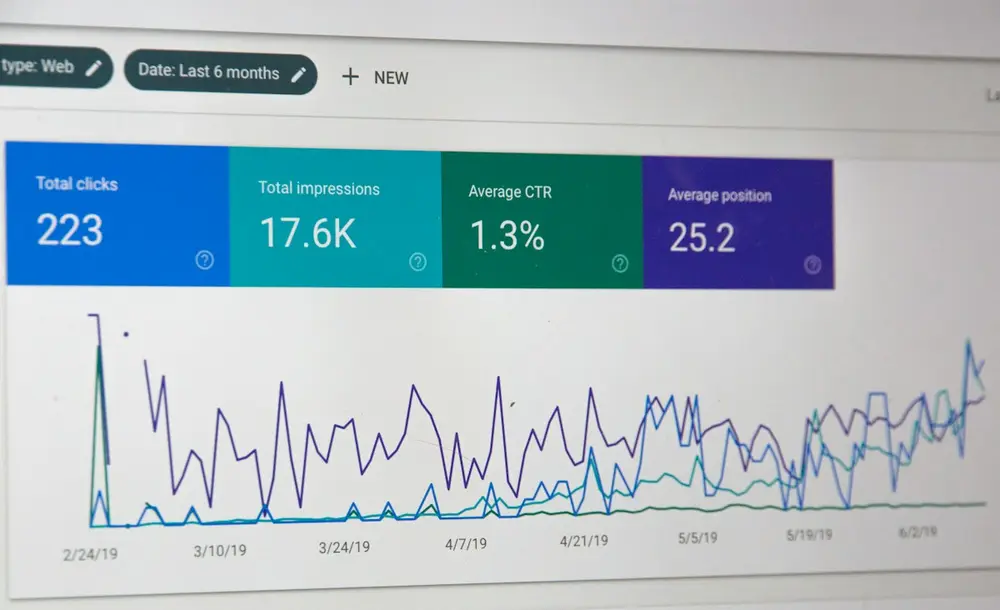
LLM monitoring watches known measures such as latency, token use, cost and error rate, and alerts when they move. LLM observability records enough detail, including traces, inputs and outputs, retrieved context and quality scores, to explain a problem nobody predicted. A simple internal chatbot can often run on monitoring; customer-facing, agentic or regulated systems need observability.
Monitoring answers known questions
Is it slow? Is it erroring? Is it costing more than last week? You decide the questions in advance.
Observability answers new ones
Why did this customer get a wrong answer? Which retrieval step failed? You can ask after the fact, because the detail was kept.
Side by side
Monitoring and observability compared
| Aspect | LLM monitoring | LLM observability |
|---|---|---|
| Main question | Is something wrong? | Why is it wrong? |
| Data kept | Aggregated metrics | Traces, redacted inputs and outputs, context, scores |
| Typical signals | Latency, tokens, cost, errors, throughput | All of those plus evaluation scores, feedback and span trees |
| Quality of answers | Not visible | Measured with faithfulness, relevance and custom checks |
| Multi-step agents | Totals only | Each step, tool call and handoff |
| Audit use | Usage and uptime history | Records of how individual decisions were made |
| Setup effort | Low | Moderate, mostly in instrumentation and redaction |
Decision guide
When monitoring is enough
Monitoring alone is usually fine if every statement below is true. If any is false, plan for observability.
- The system is internal and low-stakes
- It makes a single model call per request
- No personal, health or financial data is involved
- No regulator or customer will ask how an answer was produced
- A wrong answer is cheap and easy to spot
- There is no retrieval step, or retrieval quality doesn’t matter
Moving up
How to move from monitoring to observability
Add tracing
Instrument with OpenTelemetry so each request becomes a trace with child spans for every step.
Keep the context
Store redacted prompts, outputs and retrieved sources with each trace.
Score quality
Run faithfulness or relevance scoring on a sample of live traffic.
Close the loop
Route low scores and user complaints to review, and feed them back into tests.
FAQ
Common questions
Short answers to the questions people ask most often about this topic.
What metrics does LLM monitoring track?
Usually time to first token, total latency, input and output tokens, cost per request, error rates (including rate limits and context-length errors) and requests per minute.
What does LLM observability add?
End-to-end traces across agents and tools, redacted inputs and outputs, the retrieved context behind each answer, evaluation scores, user feedback linked to the exact trace, and exports that can serve as audit records.
Is observability more expensive than monitoring?
It stores more data, so yes, but sampling healthy traffic and keeping every failed or flagged trace keeps the cost manageable. The LLM observability cost calculator compares tool pricing for your volumes.
Do I need observability for a simple chatbot?
Not always. A low-stakes internal FAQ bot with no personal data can run on monitoring. Once you add retrieval, agents, customer-facing answers or regulated data, the first serious incident usually shows why traces matter.
Go further
Related tools, guides and services
- ArticleLLM observability: monitoring hallucinations and driftWhat to watch once an LLM is in production.Open
- ArticleHow to evaluate an LLM before deploymentThe tests to run before monitoring ever starts.Open
- Free toolAI observability maturity assessmentSee whether you are at the monitoring, tracing or evaluation stage.Open
- ServiceAI model monitoring servicesPerimattic sets up model monitoring, drift detection and alerting.Open
See what your AI systems are doing, with evidence to back it up
Perimattic AI Suite is in early access. Tell us what you are building and a Perimattic engineer will follow up to scope your first instrumented system.
Prefer email? sales@perimattic.com