
Intellyx vs Traditional MES
MES and Intellyx are often weighed against each other, but they do different jobs. An MES tells the shop floor what to make, in what order and by whom, and records how it was made. Intellyx reads what machines are doing, turns it into OEE, downtime and quality data, and uses AI to catch defects and failing equipment early. Here is how they compare, and when each makes sense.
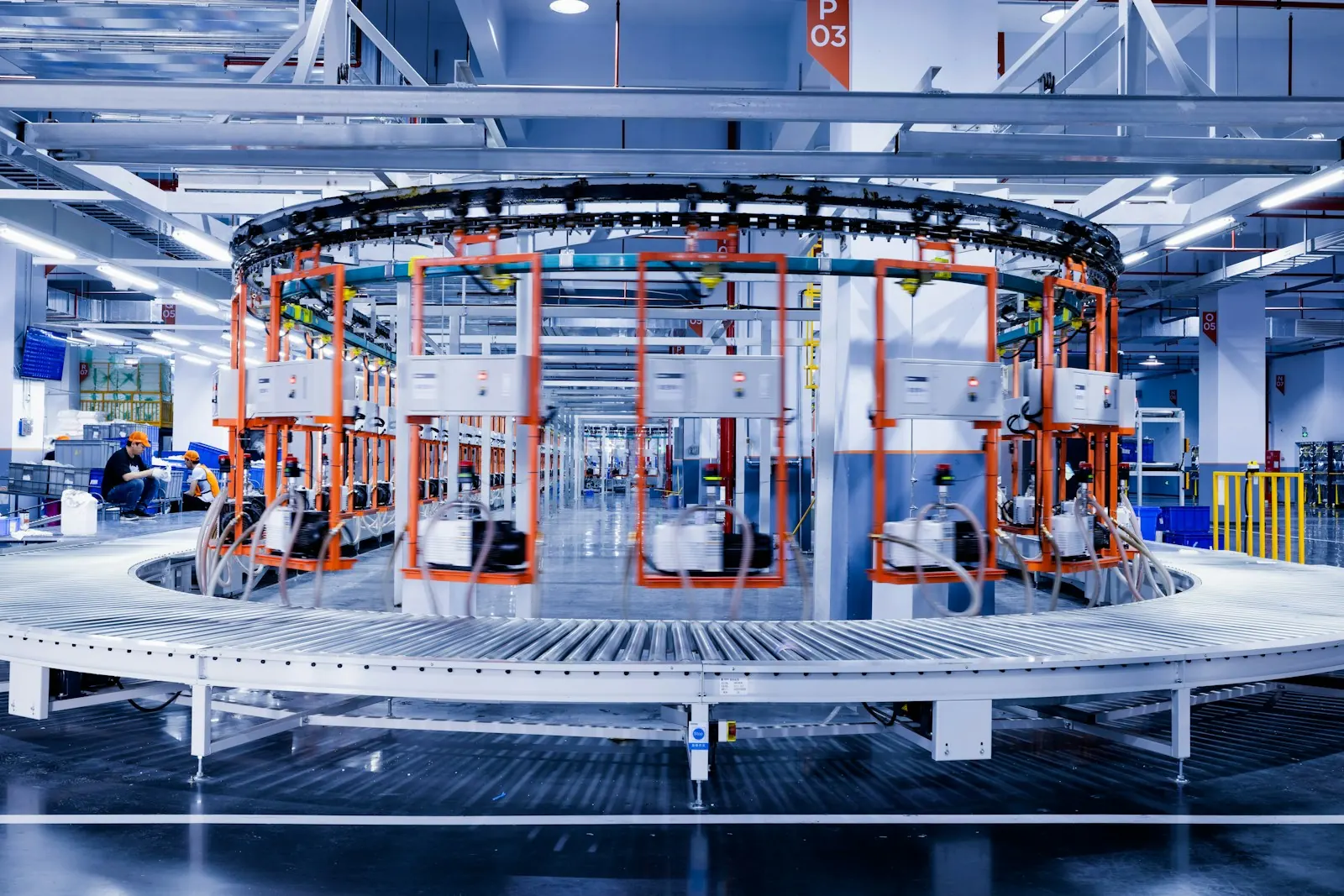
Intellyx vs Traditional MES: The Quick Answer
“A traditional MES (Manufacturing Execution System) runs production: it dispatches work orders, enforces routings, tracks labour and records genealogy. Intellyx watches production: it connects to machines and your ERP, shows OEE and downtime live, and adds AI for defect detection and predictive maintenance. A full MES project usually takes many months and a large budget. Intellyx goes live in 60 to 90 days without replacing anything. If you need to control how work is executed, choose an MES. If you need to see and improve what is happening on the floor, start with Intellyx.”

What is a Manufacturing Execution System (MES)?
An MES is the software layer that manages work in progress on the shop floor. In the ISA-95 model (IEC 62264) it sits at Level 3, between the ERP that plans orders and the PLCs and SCADA that run machines. It takes production orders from the ERP and handles what happens next: dispatching jobs to lines, enforcing the correct routing, recording material consumption, capturing quality checks and building the genealogy of every batch or serial number.
Well-known MES products include Siemens Opcenter, Rockwell FactoryTalk PharmaSuite, Dassault DELMIA Apriso, SAP Digital Manufacturing and Critical Manufacturing. They are powerful, but they work by defining your processes in detail inside the system. That is why projects take months of process mapping, master data work, integration and user training before the first line goes live.
Most Indian mid-size plants do not lack execution control as much as they lack visibility. Supervisors rely on shift reports, OEE is worked out by hand if at all, and breakdowns are discovered when output drops. That gap is what Intellyx is designed to close.
Head-to-Head Comparison
8 dimensions evaluated across both platforms.
| Dimension | Intellyx | Traditional MES |
|---|---|---|
Deployment Time | 60 to 90 days to go live | Commonly 6 to 18 months for one site, longer across several plants |
Deployment Cost | Modular: start with one module or one line and expand | Often runs into crores of rupees once licences, integration and consulting are counted |
ERP Integration Approach | Layers over your existing ERP (SAP, Tally, ERPNext) without replacing it | Becomes the system of record for execution, which usually means changing ERP workflows |
Work Order Execution and Routing | Monitoring, alerting and reporting; limited production scheduling | Full dispatching, routing enforcement, labour tracking and electronic batch records |
Traceability and Genealogy | Records machine, shift and quality data against production orders | Complete component and lot genealogy, often required in pharma, aerospace and automotive safety parts |
AI and Machine Learning | Built-in AI for defect detection, predictive maintenance and anomaly detection | Mostly rule-based logic; AI usually comes from add-ons or separate products |
Time to First Value | Live dashboards and alerts within the first 30 days | Value arrives after go-live, once processes have been modelled and users trained |
Fit for Indian Mid-Market Plants | Built for Indian SME and mid-market factories, including Tally users | Designed mainly for large enterprises with dedicated IT and consulting budgets |
Intellyx
60 to 90 days to go live
Traditional MES
Commonly 6 to 18 months for one site, longer across several plants
Intellyx
Modular: start with one module or one line and expand
Traditional MES
Often runs into crores of rupees once licences, integration and consulting are counted
Intellyx
Layers over your existing ERP (SAP, Tally, ERPNext) without replacing it
Traditional MES
Becomes the system of record for execution, which usually means changing ERP workflows
Intellyx
Monitoring, alerting and reporting; limited production scheduling
Traditional MES
Full dispatching, routing enforcement, labour tracking and electronic batch records
Intellyx
Records machine, shift and quality data against production orders
Traditional MES
Complete component and lot genealogy, often required in pharma, aerospace and automotive safety parts
Intellyx
Built-in AI for defect detection, predictive maintenance and anomaly detection
Traditional MES
Mostly rule-based logic; AI usually comes from add-ons or separate products
Intellyx
Live dashboards and alerts within the first 30 days
Traditional MES
Value arrives after go-live, once processes have been modelled and users trained
Intellyx
Built for Indian SME and mid-market factories, including Tally users
Traditional MES
Designed mainly for large enterprises with dedicated IT and consulting budgets
Which One Fits Your Plant?
Neither option is right for every factory. These are the situations where each one makes more sense.
Choose Traditional MES when
- Regulators or customers require electronic batch records, full lot genealogy or enforced routings, as in pharma, medical devices and aerospace.
- You run complex, multi-step routings where operators must be stopped from skipping or reordering operations.
- You have the budget, a dedicated project team and the patience for a programme measured in quarters, not weeks.
- Your group has already standardised on an MES at other plants and wants the same system everywhere.
Choose Intellyx when
- You cannot see OEE, downtime or scrap until the shift report arrives, and want that visible as it happens.
- Your ERP works and you do not want to rebuild workflows around a new system of record.
- Quality escapes and unplanned breakdowns cost you more than scheduling problems do.
- You want measurable results from one line within a quarter before committing to anything bigger.
Starting with Intellyx and adding an MES later
Choosing Intellyx does not rule out an MES. Many plants use visibility first to find out where execution control would actually pay back.
- 1
Connect machines and ERP
Intellyx reads PLC and sensor data and pulls production orders from your ERP, so each connected machine has live status, OEE and downtime reasons.
- 2
Fix the biggest losses
With real data on stoppages, changeovers and rejects, teams target the few causes behind most lost output.
- 3
Decide what needs control
If some lines still need enforced routings or electronic batch records, scope an MES for those lines only, using the data Intellyx has already collected.
- 4
Run both side by side
The MES handles execution, and Intellyx keeps providing monitoring, AI inspection and maintenance alerts across all lines.
Questions to Ask Any Vendor
- 1.How long until the first line is live, and what has to be configured before then?
- 2.Which of our current ERP workflows will change, and who changes them?
- 3.What does year-two cost look like, including licences, support and consultant time?
- 4.Can we start with one line and pay only for that line?
- 5.How does the system collect data from older machines that have no network port?
Our Assessment
“If your plant must enforce routings, keep electronic batch records or prove full genealogy, a traditional MES is the right tool, and it is worth the time and budget. For most Indian mid-market and SME manufacturers, the immediate need is visibility: knowing where output, quality and machine time are being lost. Intellyx delivers that faster and at lower cost, with AI inspection and predictive maintenance built in, and leaves the door open to an MES later where it is truly needed.”
Intellyx modules covered in this comparison: MES System, OEE & Production Monitoring, Predictive Machine Maintenance, Automated Vision QC.
Further reading on the Perimattic blog: MES vs Manufacturing Intelligence Platform.
Common Questions
Can Intellyx replace a full MES for our factory?
Intellyx covers the monitoring side of an MES: real-time OEE, downtime tracking, quality data and automated reporting. It does not cover the execution side, meaning work order dispatching, routing enforcement, labour tracking and electronic batch records. Many Indian manufacturers find that visibility solves most of their day-to-day problems, and some never need the execution layer at all.
What is the difference between MES and ERP?
ERP plans the business over days and months: orders, purchasing, inventory, costing and accounts. MES runs the shop floor over minutes and shifts: it dispatches the work, records what was produced and checks quality as it happens. In the ISA-95 model, ERP sits at Level 4 and MES at Level 3, exchanging production orders downward and confirmations upward.
Why does a traditional MES take so long to deploy?
An MES has to model your processes before it can run them. That means mapping routings, setting up master data, integrating with the ERP and machines, testing production scenarios and training operators. Intellyx works differently: it observes the processes you already have, so most of that configuration is not needed and deployment takes 60 to 90 days.
Do small and mid-size manufacturers need an MES?
Only some do. If you are in a regulated industry, or customers demand full traceability, an MES is often unavoidable. If your main problems are unplanned downtime, low OEE and quality escapes, a monitoring and analytics platform usually delivers results sooner and at a fraction of the cost.
How much does an MES cost in India?
It varies widely by vendor, scope and number of lines. Once software licences, integration, hardware and consulting are added up, a full MES for a mid-size plant commonly runs into crores of rupees, and integration is often the most underestimated part. Ask vendors for a total cost over three years, not just the licence fee.
We already have SAP. Should we use SAP MII or ME instead of Intellyx?
SAP MII and SAP ME suit large SAP-centric plants with in-house SAP expertise. SAP has also named SAP Digital Manufacturing as the path forward for these products. For mid-market manufacturers on SAP who need floor visibility and AI without a large SAP project, Intellyx deploys faster and adds Vision QC and predictive maintenance. The two can coexist, with Intellyx reading from SAP.
Can we start with Intellyx and add an MES later?
Yes. Intellyx does not take over the system of record, so an MES can be added later for the lines that need execution control. The data Intellyx has collected on downtime, cycle times and rejects also helps scope that MES project more accurately.
See Intellyx In Action
Intellyx deploys in 60 to 90 days for Indian factories. Book a discovery call to understand how it compares to Traditional MES for your specific requirements.