

Key Takeaways
- MES generally governs and records production execution; manufacturing intelligence platforms emphasise operational visibility and analysis.
- The boundary is not absolute. A product can combine monitoring, analytics, quality workflows, and MES functions.
- If you need work-order dispatch, routing, genealogy, or enforced operator steps, assess MES requirements directly.
- If your immediate gap is machine visibility, OEE, alerts, and cross-plant reporting, a focused intelligence deployment may be a lower-scope starting point.
- Any claim about deployment speed or cost is vendor-specific; validate it against the same scope and assumptions.
The distinction is useful, but the product labels overlap. Choose based on the work the software must control.
Why the terms get mixed up
Both categories can show production status, connect to ERP, and present shop-floor data. Vendors also use “MES,” “manufacturing intelligence,” “shop-floor platform,” and “operations platform” differently. A label alone will not tell you whether a system controls execution or mainly informs decisions.
The practical distinction is the system’s job. Does it tell people what order to run, which operation is next, what material to consume, and whether the step is complete? Or does it collect signals and help the team understand output, downtime, quality, and emerging constraints? Many factories need elements of both.
What MES usually does

A Manufacturing Execution System sits between enterprise planning and production activity. Depending on scope, it may dispatch work orders, manage routings and work instructions, capture operator confirmations, enforce process steps, track WIP, record material consumption, maintain genealogy, manage quality gates, and send actuals back to ERP.
An MES project can involve more than software configuration: process standardisation, master-data cleanup, device and machine integration, operator interfaces, validation, training, and change management. The breadth is useful when execution must be controlled and traceable, but it takes careful scoping.
What a manufacturing intelligence platform usually does
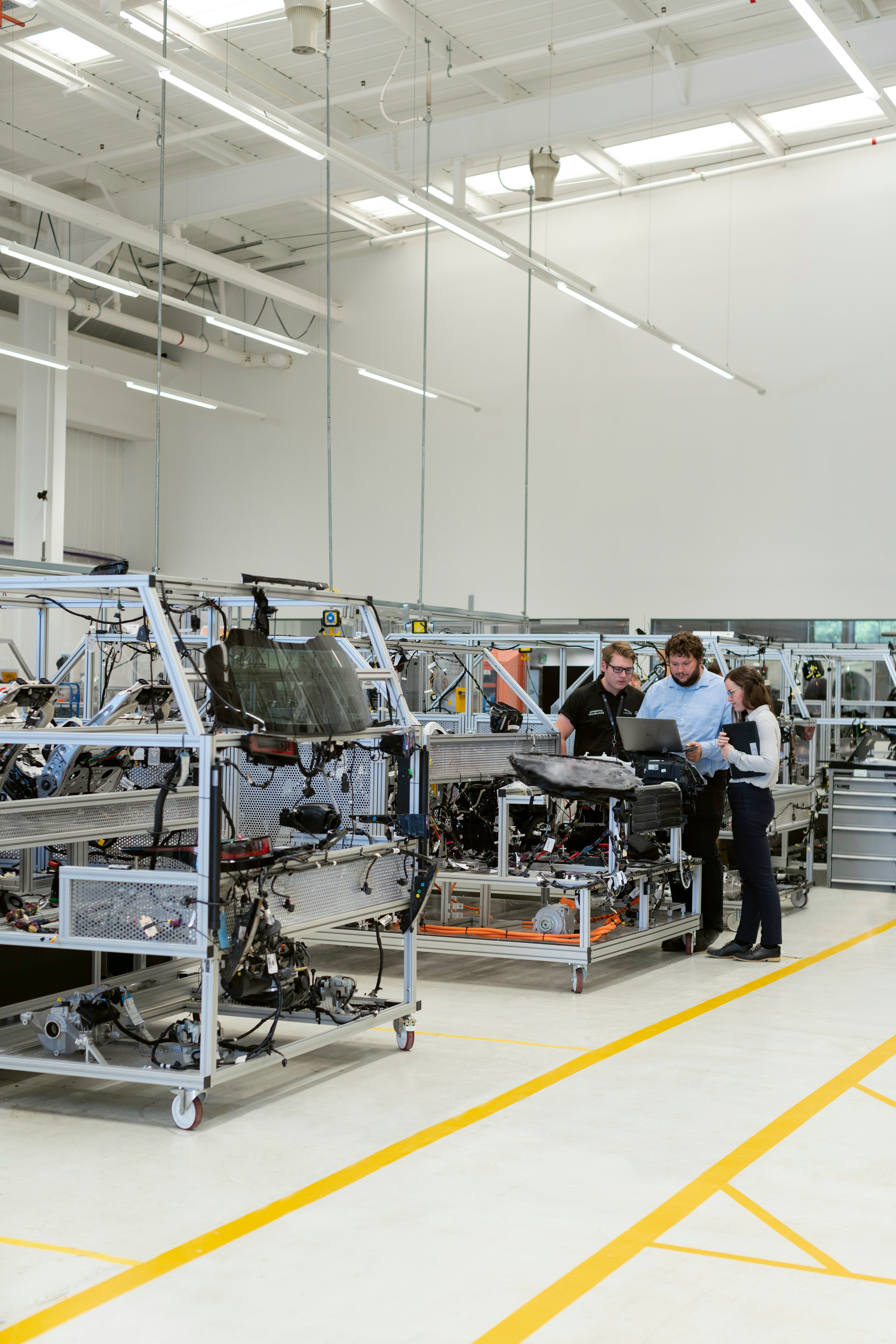
A manufacturing intelligence platform tends to make the live state and performance of production easier to see. It may combine PLC or sensor data, production targets, downtime events, quality signals, maintenance conditions, and energy usage into dashboards, alerts, and analysis.
It can be valuable when a factory already has ERP and established work processes but lacks timely, trustworthy operational visibility. It may complement an MES, consume MES data, or overlap with selected execution workflows.
A capability comparison
| Production scheduling and work-order dispatch: | Typically central to MES scope; may be limited or absent in an intelligence-first platform. |
| Machine-state and OEE visibility: | Common in intelligence platforms; may also be part of MES or a connected production module. |
| Operator instructions and enforced routing: | Usually a core MES requirement; do not assume a dashboard platform provides controlled execution. |
| Material genealogy and WIP tracking: | Commonly evaluated in MES projects, especially for traceability needs. |
| Cross-plant KPI dashboards and alerts: | Often a strength of intelligence platforms; MES products may also provide these views. |
| Predictive maintenance, energy, vision analytics: | May be bundled into an intelligence suite or integrated as specialist modules; inspect actual product scope. |
When an intelligence-first approach may fit
A plant has an ERP and work orders, but supervisors still learn about stoppages at shift handover. It needs automatic downtime capture, production-versus-target visibility, and standardised reporting across plants. It is not yet asking software to enforce every routing step or maintain full serial-level genealogy.
In that situation, a scoped monitoring layer can address a measurable gap while limiting initial process disruption. It can also surface whether the larger constraint is execution control, machine reliability, quality, or data discipline.
When you need MES capabilities

If the factory needs electronic work instructions, enforced operation sequence, WIP tracking, genealogy, material reconciliation, production dispatch, or validated electronic batch records, an intelligence dashboard alone is unlikely to meet the requirement. Build a detailed workflow and traceability specification, then compare MES options against it.
Some manufacturers should evaluate a phased architecture: retain ERP as the planning and financial system, introduce execution functions where needed, and connect intelligence analytics across machine and quality data. Decide which system is authoritative for each record to avoid conflicting production truth.
How to compare cost and time claims fairly
Perimattic’s Intellyx MES page claims a 90-day deployment and compares it with 12–24 months for traditional MES projects. This is a vendor claim, not a universal industry benchmark. Project timelines depend on sites, lines, routing complexity, validation, integrations, and data readiness.
Compare quotes using the same scope: number of plants and machines; integrations; genealogy depth; operator terminals; validation deliverables; migration; training; support; hardware; and ongoing licence cost. A smaller first phase can be cheaper because it does less. That is a meaningful choice only if the omitted functions are not required.
A short decision checklist
- List the decisions to improve: Examples: respond to a stoppage within minutes, prove which lot ran on a machine, or prevent an operator from skipping a critical inspection.
- Name the required records: Identify which system creates, approves, and retains each production and quality record.
- Map workflows: Walk through order release, setup, production, inspection, rework, and closeout.
- Separate must-have from useful: Do not buy a broad system for dashboards if execution control is the real requirement, or vice versa.
- Pilot against evidence: Set success measures and test integrations, user adoption, and data integrity before wider rollout.
Conclusion
MES and manufacturing intelligence platforms answer related but different questions. MES helps manage how work is executed and recorded; intelligence software helps teams understand what is happening and where action is needed. Product boundaries overlap, so use real workflows and records to guide the decision.
Read Perimattic’s Intellyx vs. MES comparison and review the Intellyx product overview.
Sources and further reading
- Perimattic: Intellyx vs. MES comparison | https://perimattic.com/compare/intellyx-vs-mes/
- Intellyx MES overview | https://perimattic.com/products/perimattic-intellyx/mes-system/
- Intellyx OEE Monitoring | https://perimattic.com/products/perimattic-intellyx/oee-monitoring/
- Intellyx deployment overview | https://perimattic.com/products/perimattic-intellyx/how-it-works/